




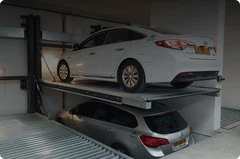

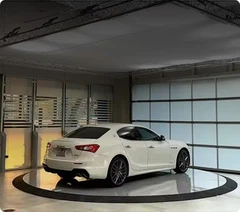
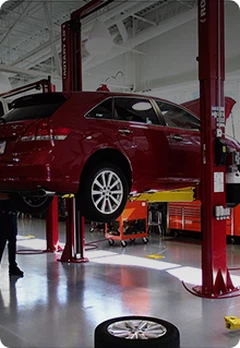


To address workshop storage limitations, a well-known British automotive performance tuning and precision repair service provider implemented five connected 2 post, 2 cars parking lift systems. This solution fully utilizes a 15-meter-wide installation area to form a modular vertical storage matrix, significantly improving space utilization in the facility.

Core Technology Highlights
Double-Layer, Heavy-Duty Load-Bearing Structure
Each platform is customized to support up to 3,200 kg. A dual-cylinder synchronous hydraulic system ensures balanced lifting, accommodating various modified vehicle types, including supercars and SUVs.
Intelligent Vertical Parking Design
Each unit allows for vertical parking of two vehicles. Within the 15-meter area, up to 10 vehicles can be stored, increasing storage density by approximately 300% compared to traditional ground-level parking.
Industrial-Grade Safety Features
Hydraulic parking system is equipped with column-mounted anti-collision sensors, dual electromagnetic locking mechanisms, and load sensing devices. It complies with CE safety standards for operational reliability.
Operational Outcomes
Improved Space Efficiency
The capacity of the vehicle maintenance waiting area increased from 5 to 10 vehicles, resulting in a 150% improvement in turnover rate.
01
Workshop Workflow Optimization (6S Compliance)
Ground clutter caused by parked vehicles has been eliminated. The usable aisle width has expanded by 2.1 meters, improving the movement paths for tools and equipment.
02
Full-Cycle Value Enhancements
★ The equipment operates an average of 18 hours per day, contributing to a shortened return on investment period of 14 months.
★ Corrosion-resistant coating (DIN 51230 standard) helps reduce long-term maintenance expenses by an estimated 45%.
★ The modular structure allows for future expansion of production lines as business needs evolve.
03
Lifecycle Cost Efficiency
An IP65-rated hydraulic system minimizes maintenance frequency and contributes to extending the service life of the equipment by approximately 40%.
04