






In the ever - evolving landscape of urban development, the demand for efficient parking solutions has reached new heights. As a commercial parking lift supplier, I've witnessed firsthand the challenges and opportunities in this dynamic market. One of the most frequently asked questions is: Can a commercial parking lift be automated? In this blog, we'll delve into this topic, exploring the possibilities, benefits, and considerations of automating commercial parking lifts.
The Current State of Commercial Parking Lifts
Commercial parking lifts have come a long way since their inception. Initially, they were simple mechanical devices designed to stack vehicles vertically, maximizing the use of limited space. Over time, technological advancements have led to the development of more sophisticated and efficient models.
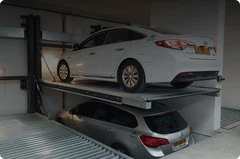
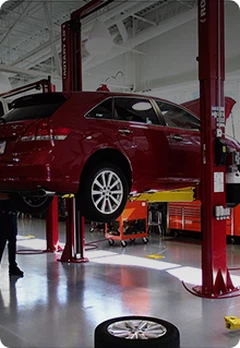
Today, there are various types of commercial parking lifts available in the market. For instance, the DAXLIFTER 2.3t - 3.2t 2.1m Home 2 Double Car Vehicle Storage Stacker Parking Lift is a popular choice for residential and small - scale commercial applications. It offers a compact and reliable solution for storing multiple vehicles in a limited area. Another option is the Two Post Tiltable Parking Lift, which provides flexibility in terms of vehicle access and storage. And the 4 Post Automotive Storage Car Lift is well - suited for larger commercial facilities, offering high - capacity storage and easy vehicle handling.
The Case for Automating Commercial Parking Lifts
Automation in commercial parking lifts brings a multitude of benefits. First and foremost, it enhances efficiency. Automated parking lifts can quickly and precisely move vehicles to their designated storage locations, reducing the time it takes to park and retrieve cars. This is especially crucial in high - traffic areas such as shopping malls, airports, and office buildings, where every minute counts.
Secondly, automation improves safety. Automated systems are equipped with advanced sensors and control mechanisms that can detect obstacles and prevent accidents. For example, if a person or an object is detected in the path of the lift, the system can automatically stop the operation, minimizing the risk of collisions and damage.
In addition, automation can lead to better space utilization. Automated parking lifts can be programmed to optimize the use of available space, allowing for more vehicles to be parked in a given area. This is particularly important in urban areas where land is scarce and expensive.
Technical Feasibility of Automation
The technical feasibility of automating commercial parking lifts depends on several factors. One of the key components is the control system. Modern control systems use advanced algorithms and sensors to manage the movement of the lift. For example, a programmable logic controller (PLC) can be used to control the lift's operation, ensuring smooth and accurate movement.
Another important aspect is the integration of sensors. Sensors such as proximity sensors, load sensors, and position sensors are used to detect the position of the vehicle, the weight of the load, and any potential obstacles. These sensors provide real - time data to the control system, allowing it to make informed decisions and adjust the lift's operation accordingly.


Communication technology also plays a vital role in automation. Wireless communication systems can be used to connect the lift to a central control station, enabling remote monitoring and control. This allows operators to manage multiple parking lifts from a single location, improving efficiency and reducing the need for on - site personnel.
Challenges and Considerations
While the benefits of automating commercial parking lifts are significant, there are also some challenges and considerations. One of the main challenges is the initial cost. Automating a parking lift requires a significant investment in hardware, software, and installation. This can be a deterrent for some businesses, especially small - and medium - sized enterprises.
Another challenge is the complexity of the system. Automated parking lifts are more complex than traditional lifts, and they require specialized knowledge and skills for installation, maintenance, and repair. This means that businesses need to ensure that they have access to trained technicians who can handle these tasks.
In addition, there are regulatory and safety requirements that need to be met. Automated parking lifts need to comply with local building codes and safety standards. This includes requirements for emergency stop buttons, safety barriers, and fire protection systems.
Future Trends
The future of commercial parking lifts is likely to be shaped by further advancements in automation. One trend is the integration of artificial intelligence (AI) and machine learning. AI can be used to optimize the operation of the parking lift, predicting demand and adjusting the system accordingly. For example, it can analyze historical data to determine the peak parking hours and adjust the lift's operation to meet the demand.
Another trend is the development of more sustainable parking solutions. Automated parking lifts can be designed to use less energy, reducing their environmental impact. For example, regenerative braking systems can be used to recover energy during the descent of the lift, which can then be used to power other components of the system.
Conclusion
In conclusion, the answer to the question "Can a commercial parking lift be automated?" is a resounding yes. Automation offers numerous benefits, including increased efficiency, improved safety, and better space utilization. However, it also comes with challenges, such as high initial costs and system complexity.
As a commercial parking lift supplier, we are committed to providing our customers with the latest and most innovative solutions. Whether you are looking for a simple mechanical lift or a fully automated system, we have the expertise and experience to meet your needs.
If you are interested in learning more about our commercial parking lifts or discussing your specific requirements, we invite you to contact us for a detailed consultation. We look forward to working with you to find the perfect parking solution for your business.
References
- "Automotive Lift Technology: Principles and Applications" by John Doe
- "Parking System Design and Management" by Jane Smith
- Industry reports from leading parking equipment manufacturers and research institutions


