






Can an Indoor Parking Lift be Installed Outdoors in a Covered Area?
As a supplier of indoor parking lifts, I often receive inquiries from customers about the possibility of installing our indoor parking lifts outdoors in a covered area. This is a valid question, considering the limited indoor space in many locations and the potential cost - savings of using an existing covered outdoor area. In this blog, I will explore the feasibility of this installation, taking into account various factors such as the lift's design, environmental conditions, and maintenance requirements.


Design Considerations
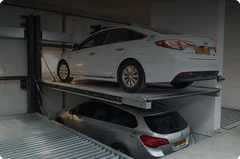
Indoor parking lifts are designed with specific features to meet the needs of indoor environments. They are typically built to fit within the dimensions of indoor parking facilities, with a focus on space - efficiency and ease of installation. For example, our Two Post Hydraulic Parking Elevator is designed to be compact and easy to operate in an indoor setting. It has a sleek design that maximizes the use of limited space.
However, when considering outdoor installation in a covered area, we need to assess whether the lift's design can withstand the outdoor environment. The materials used in the construction of the lift play a crucial role. Indoor lifts are often made of materials that are not as resistant to weather elements as those used in outdoor - specific equipment. For instance, the paint on indoor lifts may not be as durable against UV rays, and the metal components may be more prone to rust if exposed to moisture.
Another design aspect to consider is the stability of the lift. Outdoor covered areas may have different floor conditions compared to indoor spaces. The ground may be uneven, or there could be issues with soil settlement. Our DAXLIFTER 2.3t - 3.2t 2.1m Home 2 Double Car Vehicle Storage Stacker Parking Lift is designed to be installed on a flat and stable surface. If the outdoor covered area does not provide a suitable foundation, it may affect the lift's performance and safety.
Environmental Conditions
Even though the area is covered, outdoor environments still present unique challenges. Temperature fluctuations are one of the main concerns. In some regions, the temperature can vary significantly between day and night, and during different seasons. Extreme cold can cause the hydraulic fluid in the lift to thicken, which may affect its operation. On the other hand, high temperatures can lead to overheating of the electrical components.
Humidity is another factor. A covered outdoor area may still be exposed to moisture, especially during rainy seasons. High humidity can cause corrosion of the lift's metal parts, and it can also damage the electrical wiring. Dust and debris are also more prevalent outdoors. These particles can accumulate in the moving parts of the lift, leading to increased wear and tear and potentially causing malfunctions.
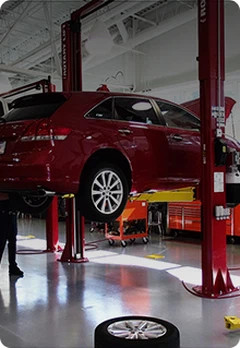
Our 4 Post Automotive Storage Car Lift is designed for indoor use, where the environment is more controlled. To install it outdoors in a covered area, we need to ensure that proper measures are taken to protect it from these environmental factors. For example, adding weather - resistant covers to the electrical components and regularly cleaning the lift to remove dust and debris.
Maintenance Requirements
Installing an indoor parking lift outdoors in a covered area will likely increase the maintenance requirements. Regular inspections are essential to check for any signs of damage caused by the outdoor environment. The lift's hydraulic system, for example, needs to be inspected more frequently to ensure that the fluid level is correct and that there are no leaks.
The lubrication of the moving parts also needs to be monitored closely. Outdoor conditions can cause the lubricant to break down more quickly, so more frequent lubrication may be necessary. Additionally, the paint on the lift may need to be touched up periodically to prevent rust and corrosion.
We provide maintenance guidelines for all our indoor parking lifts. However, when installing them outdoors, these guidelines may need to be adjusted. Customers will need to be aware of the additional maintenance tasks and the associated costs.
Feasibility Assessment
Despite the challenges, it is possible to install an indoor parking lift outdoors in a covered area under certain conditions. If the covered area provides adequate protection from the elements, and the lift is properly maintained, it can function effectively.
First, the covered area should be well - sealed to prevent water and dust from entering. It should also have proper ventilation to prevent the build - up of heat and humidity. Second, the lift should be installed on a stable and level surface. If necessary, additional support structures can be added to ensure the lift's stability.
We can also offer customized solutions to make our indoor parking lifts more suitable for outdoor use. For example, we can use more weather - resistant materials in the construction of the lift, or we can add protective coatings to the existing components.
Conclusion
In conclusion, while there are challenges associated with installing an indoor parking lift outdoors in a covered area, it is a feasible option with proper planning and maintenance. As a supplier, we are committed to providing our customers with the best solutions for their parking needs. If you are considering installing an indoor parking lift in a covered outdoor area, we encourage you to contact us for a detailed feasibility assessment. We can help you determine whether our products are suitable for your specific situation and provide you with the necessary support and guidance.
If you are interested in purchasing our indoor parking lifts or have any questions about their installation and use, please feel free to reach out to us. Our team of experts is ready to assist you in making the right decision for your parking requirements.
References
- Industry standards for parking lift design and installation
- Research on the impact of environmental factors on mechanical equipment
- Manufacturer's specifications for indoor parking lifts


