






Hey there! I'm a supplier of stacker parking lifts, and I often get asked how these nifty machines ensure vehicle stability during stacking. Well, buckle up, because I'm about to take you on a ride through the world of stacker parking lift technology!


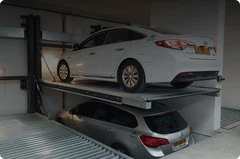
First off, let's talk about the basic design. Stacker parking lifts come in different shapes and sizes, but they all share a common goal: to safely stack vehicles on top of each other. One of the most popular types is the Two Post Tiltable Parking Lift. This type of lift uses two posts to support the vehicle, and it can be tilted to make it easier to drive on and off. The two-post design provides a stable base for the vehicle, and the tilting feature helps to distribute the weight evenly.
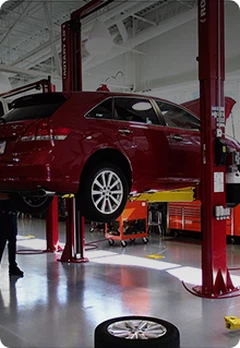
Another type of stacker parking lift is the DAXLIFTER 4 Four Post Indoor Outdoor Commercial Vehicle Parking Lift. As the name suggests, this lift has four posts, which provides even more stability. It's designed for commercial use, so it can handle heavier vehicles and more frequent use. The four-post design also allows for a wider range of vehicle sizes to be parked on the lift.
For those who need a more compact solution, the DAXLIFTER 2.3t - 3.2t 2.1m Home 2 Double Car Vehicle Storage Stacker Parking Lift is a great option. This lift is designed for home use and can stack two cars on top of each other. It's smaller in size but still offers excellent stability. The lift is engineered to support the weight of the vehicles and keep them secure during the stacking process.
Now, let's dive into the key features that ensure vehicle stability. One of the most important aspects is the hydraulic system. Most stacker parking lifts use a hydraulic system to raise and lower the platforms. The hydraulic cylinders are designed to provide smooth and even lifting power. They work in tandem to ensure that the platform rises and lowers evenly, which is crucial for maintaining the stability of the vehicle. If one side of the platform were to rise or lower faster than the other, it could cause the vehicle to tilt or even fall off the lift.
The hydraulic system also has built - in safety features. For example, most lifts have a pressure relief valve. This valve prevents the hydraulic system from over - pressurizing, which could lead to a malfunction. If the pressure in the system gets too high, the valve will open and release the excess pressure, ensuring the safety and stability of the lift.
Another important feature is the locking mechanism. Once the vehicle is lifted to the desired height, the lift needs to be locked in place. Stacker parking lifts typically have multiple locking points. These locks are designed to hold the platform securely in position, preventing it from accidentally lowering or moving. Some locks are mechanical, while others are electronic. Mechanical locks are often used as a secondary safety measure, providing an extra layer of protection in case the electronic locks fail.
The platform design also plays a big role in vehicle stability. The platforms are usually made of high - strength steel or aluminum. They are designed to be flat and level, which helps to keep the vehicle's wheels in contact with the platform evenly. Some platforms have non - slip surfaces to prevent the vehicle from sliding during the lifting or stacking process. Additionally, the platforms are often designed with guides or restraints to keep the vehicle in the correct position. These guides can prevent the vehicle from shifting side - to - side or forward - backward while it's on the lift.
The alignment of the lift is also crucial. During installation, the lift needs to be carefully aligned to ensure that it is level and plumb. If the lift is not properly aligned, it can cause uneven stress on the vehicle and the lift components, which can lead to instability. Professional installers use precision tools to ensure that the lift is installed correctly.
Regular maintenance is essential for ensuring vehicle stability. Just like any other piece of machinery, stacker parking lifts need to be inspected and maintained regularly. This includes checking the hydraulic fluid levels, inspecting the locking mechanisms, and looking for any signs of wear or damage on the platforms and other components. By performing regular maintenance, you can catch any potential problems before they become serious and ensure that the lift continues to operate safely and stably.
In addition to these technical features, our company also provides training and support to our customers. We understand that proper operation is just as important as the design and features of the lift. That's why we offer training on how to use the lift correctly, including how to load and unload vehicles safely, how to operate the controls, and how to perform basic maintenance.
So, there you have it! That's how stacker parking lifts ensure vehicle stability during stacking. Whether you're a commercial business looking to maximize your parking space or a homeowner with limited parking, our stacker parking lifts are designed to provide a safe and stable solution.
If you're interested in learning more about our stacker parking lifts or are thinking about making a purchase, we'd love to hear from you. Contact us to start a conversation about your parking needs and how our products can meet them. We're here to help you find the perfect solution for your situation.
References
- Parking Lift Technology Handbook, industry - published guide on stacker parking lift design and operation.
- Hydraulic Systems in Automotive Equipment, technical manual on hydraulic systems used in vehicle lifts.


