


As a car service lift supplier, I'm excited to share with you the inner workings of these essential pieces of equipment. Car service lifts are crucial in automotive repair shops, garages, and even home settings, allowing mechanics and enthusiasts to access the undercarriage of vehicles easily. In this blog, we'll delve into how different types of car service lifts operate, their components, and the benefits they offer.
Hydraulic 2 - Post Car Lifts
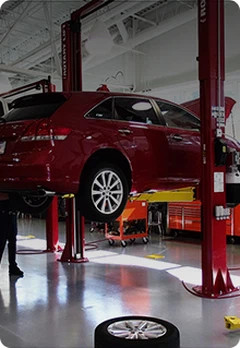
One of the most common types of car service lifts is the 2 - post hydraulic lift, such as the DAXLIFTER 3.5T - 4.5T 2 Post Car Garage Car Lift. These lifts are designed to lift vehicles vertically by supporting the vehicle at two points, typically on the frame or designated lifting points.
Components
The main components of a 2 - post hydraulic lift include two columns, hydraulic cylinders, chains or cables, and a control system. The columns are the vertical structures that provide support for the lift. Inside each column, there is a hydraulic cylinder. The hydraulic cylinder is a crucial part that converts hydraulic pressure into mechanical force.
The chains or cables are attached to the hydraulic cylinders and the lift arms. They transfer the lifting force from the cylinders to the vehicle. The control system, usually located on the side of one of the columns, allows the operator to raise and lower the lift.
How It Works
When the operator activates the lift using the control system, an electric motor pumps hydraulic fluid from a reservoir into the hydraulic cylinders. As the fluid enters the cylinders, it creates pressure, which causes the pistons inside the cylinders to rise. The rising pistons pull the chains or cables attached to them, and the lift arms, which are connected to the chains or cables, start to move upward.

The vehicle, which is resting on the lift arms, is then lifted off the ground. To lower the vehicle, the control system releases the hydraulic pressure in the cylinders. The hydraulic fluid flows back into the reservoir, and the pistons and lift arms gradually descend under the weight of the vehicle.
4 - Post Car Hoists
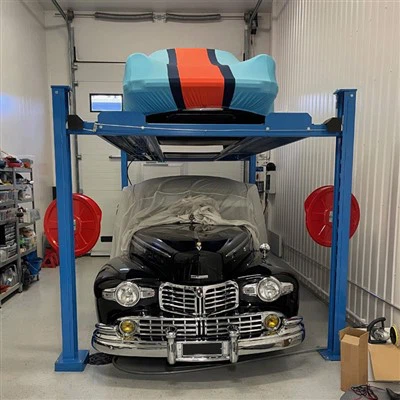
Another popular type of car service lift is the 4 - post car hoist, like the DAXLIFTER 3.5T 4 Post Car Hoist Lift with Second Lifting Function. These lifts support the vehicle at four points, providing a more stable platform for lifting.
Components
A 4 - post car hoist consists of four columns, a hydraulic or mechanical lifting mechanism, a runway system, and a locking system. The columns provide the vertical support for the lift. The runway system is where the vehicle drives onto the lift. It is usually made of steel and has a non - slip surface.
The lifting mechanism can be either hydraulic or mechanical. In hydraulic 4 - post hoists, hydraulic cylinders are used to lift the platform. In mechanical hoists, a system of gears and chains is employed. The locking system ensures that the lift remains in a stable position once the vehicle is lifted.
How It Works
For hydraulic 4 - post hoists, when the operator activates the lift, the hydraulic pump sends fluid to the cylinders. The cylinders then push the platform upward, along with the vehicle on it. The locking system engages at regular intervals as the lift rises, preventing accidental lowering.
In mechanical 4 - post hoists, the operator uses a motor or a hand - crank to turn a series of gears. The gears drive the chains, which in turn lift the platform. The locking system works in a similar way to the hydraulic version, ensuring the safety of the lifted vehicle.
Motorcycle Lifts
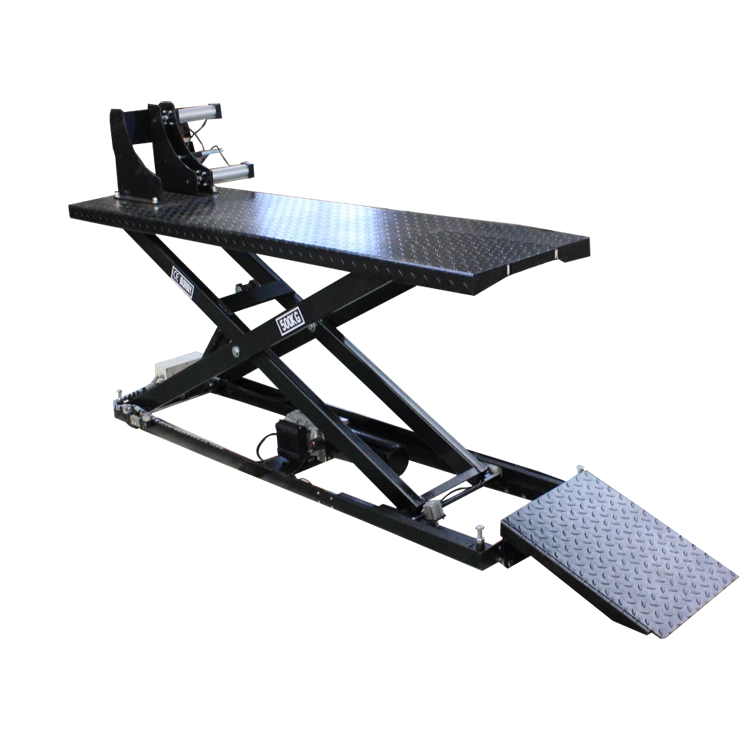
Motorcycle lifts, such as the Motorcycle Lift, are designed specifically for lifting motorcycles. They are smaller and more compact compared to car lifts.
Components
A typical motorcycle lift includes a platform, a lifting mechanism, and a support structure. The platform is where the motorcycle is placed. The lifting mechanism can be hydraulic, pneumatic, or mechanical. The support structure provides stability to the lift.
How It Works
In a hydraulic motorcycle lift, the operator activates a pump to send hydraulic fluid to a cylinder. The cylinder then extends, lifting the platform and the motorcycle on it. Pneumatic motorcycle lifts use compressed air to power the lifting mechanism. When the operator releases the compressed air into the system, it creates pressure that lifts the platform.
Mechanical motorcycle lifts often use a screw - jack mechanism. The operator turns a handle, which rotates a screw. The screw moves a nut, which is connected to the platform, causing the platform to rise.
Pneumatic Scissor Car Jacks
Pneumatic scissor car jacks, like the Pneumatic Scissor Car Jack, are a type of portable car lift. They are commonly used in emergency situations or for quick repairs.
Components
A pneumatic scissor car jack consists of a scissor - like structure, a pneumatic cylinder, and a base. The scissor structure is made up of several linked metal bars that can expand and contract. The pneumatic cylinder is responsible for providing the lifting force, and the base provides stability.
How It Works
When the operator connects the jack to a compressed air source, the compressed air enters the pneumatic cylinder. The air pressure inside the cylinder causes the piston to move, which in turn expands the scissor - like structure. As the scissor structure expands, it raises the platform on top of it, lifting the vehicle. To lower the vehicle, the operator releases the air pressure in the cylinder, and the scissor structure contracts under the weight of the vehicle.
Portable Garage Car Service Lifts
Portable garage car service lifts, such as the DAXLIFTER Portable Garage Car Service Lift for Home, are designed for home use or for small garages. They are easy to move and set up.
Components
These lifts typically include a platform, a lifting mechanism (usually hydraulic or electric), wheels for mobility, and a support system. The platform is where the vehicle is placed, and the lifting mechanism is responsible for raising and lowering the platform. The wheels allow the lift to be moved around, and the support system ensures stability during operation.
How It Works
In a hydraulic portable lift, an electric motor pumps hydraulic fluid into a cylinder. The cylinder then extends, lifting the platform. Electric portable lifts use an electric motor to drive a screw or a gear system that raises the platform. Once the vehicle is lifted to the desired height, the support system is engaged to keep the lift stable.
Benefits of Using Car Service Lifts
Using car service lifts offers several benefits. Firstly, they provide easy access to the undercarriage of vehicles, which is essential for tasks such as oil changes, brake repairs, and tire rotations. This saves time and effort for mechanics.
Secondly, car service lifts improve safety. They provide a stable and secure platform for working on vehicles, reducing the risk of accidents compared to using traditional jacks.
Finally, they increase the efficiency of automotive repair operations. With a lift, multiple tasks can be performed simultaneously, and the overall workflow in a garage or repair shop is improved.
Conclusion
Car service lifts are complex yet essential pieces of equipment in the automotive industry. Whether it's a 2 - post lift, a 4 - post hoist, a motorcycle lift, a pneumatic scissor car jack, or a portable garage lift, each type operates based on specific principles and uses different components.
If you're in the market for a car service lift, we're here to help. Our company specializes in providing high - quality car service lifts that meet the needs of various customers, from professional mechanics to home enthusiasts. Contact us to discuss your requirements and start the procurement process. We look forward to working with you to find the perfect car service lift for your needs.
References
- "Automotive Lifts: A Guide to Selection and Use" by the Automotive Lift Institute.
- "Hydraulic Systems in Automotive Equipment" by various industry experts.