








Hey there, folks! As a supplier of garage lifts, I know how crucial it is to keep your equipment in top - notch condition. One of the most basic yet important maintenance tasks is checking the hydraulic fluid level in your garage lift. In this blog, I'll walk you through the whole process.
First off, let me tell you why checking the hydraulic fluid level is so important. Hydraulic fluid is like the life - blood of your garage lift. It's responsible for transmitting power within the hydraulic system, allowing the lift to raise and lower heavy vehicles smoothly. If the fluid level is too low, it can lead to all sorts of problems. The lift might not operate as smoothly, it could make strange noises, and in the worst - case scenario, it could even cause damage to the hydraulic pump and other components.
Now, before we start, you need to gather a few tools. You'll need a clean rag, a flashlight (especially if your lift is in a dimly lit area), and a dipstick or a sight glass. Most modern garage lifts come with either a dipstick or a sight glass to help you check the fluid level easily.
Let's start with the pre - check steps. First, make sure your lift is turned off and the power is disconnected. Safety first, right? You don't want the lift to suddenly move while you're checking the fluid. Also, if there's a vehicle on the lift, lower it all the way down to the ground. This will give you an accurate reading of the hydraulic fluid level.
If you're using a lift like the DAXLIFTER 3.5T 4 Post Car Hoist Lift with Second Lifting Function, it's a bit different from a 2 - post lift. The 4 - post lift usually has a larger hydraulic reservoir, and it's often located in a specific compartment. Use your flashlight to find the reservoir. It's usually a large tank made of metal or plastic. Once you've located it, find the dipstick or sight glass.
For a dipstick, pull it out, wipe it clean with the rag, and then insert it back into the reservoir all the way. Pull it out again, and check the fluid level on the dipstick. There are usually markings on the dipstick that indicate the minimum and maximum levels. The fluid level should be between these two marks. If it's below the minimum mark, you need to add some hydraulic fluid.
If you have a sight glass, it's even easier. The sight glass is a clear tube or window on the side of the reservoir. You can simply look through it to see the fluid level. Make sure the fluid is within the visible range and above the minimum level.
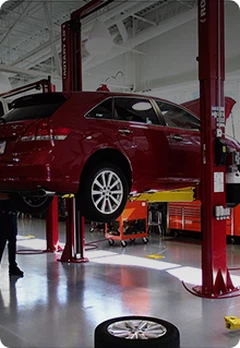
Now, let's talk about the DAXLIFTER 3.5T - 4.5T 2 Post Car Garage Car Lift. 2 - post lifts are more common in smaller garages. The hydraulic reservoir on a 2 - post lift is often located near the base of the lift columns. It might be a bit harder to access compared to a 4 - post lift. But once you've found it, the process is the same. Check the dipstick or sight glass to see the fluid level.
If you're using a DAXLIFTER Portable Garage Car Service Lift for Home, it's a bit more compact. The hydraulic reservoir is usually smaller and easier to access. But the principle is the same. Locate the reservoir, find the dipstick or sight glass, and check the fluid level.
What if the fluid level is low? Well, you need to add hydraulic fluid. But be careful! Use only the type of hydraulic fluid recommended by the manufacturer. Different lifts require different types of hydraulic fluid, and using the wrong one can cause damage to the system. You can usually find the recommended fluid type in the lift's user manual.
When adding the fluid, pour it slowly into the reservoir. Keep an eye on the dipstick or sight glass as you pour. Stop adding fluid once it reaches the maximum level. Don't overfill it, as this can also cause problems, like leaks or excessive pressure in the system.
After you've added the fluid, it's a good idea to run the lift a few times. Raise and lower it slowly a couple of times. This will help the fluid circulate through the system and ensure that there are no air bubbles. Air bubbles in the hydraulic system can cause the lift to operate erratically.
While you're checking the fluid level, take a moment to inspect the hydraulic lines. Look for any signs of leaks, such as wet spots or puddles under the lift. If you see any leaks, it's important to address them immediately. Leaks can not only lead to a loss of hydraulic fluid but also pose a safety risk.
Another thing to keep in mind is the quality of the hydraulic fluid. Over time, the fluid can become dirty or contaminated. If the fluid looks cloudy, has debris in it, or has a strange odor, it might be time to change the fluid. Changing the hydraulic fluid is a more involved process, but it's essential for the long - term health of your lift.


Regularly checking the hydraulic fluid level is just one part of the overall maintenance of your garage lift. You should also lubricate the moving parts, check the cables and chains (if applicable), and inspect the structural integrity of the lift.
In conclusion, checking the hydraulic fluid level in your garage lift is a simple but important task. By following these steps, you can ensure that your lift operates smoothly and safely. Whether you have a 4 - post lift, a 2 - post lift, or a portable lift, the process is similar. Just make sure you do it regularly, and you'll extend the lifespan of your lift.
If you're in the market for a new garage lift or have any questions about maintenance, feel free to reach out. We're here to help you make the best choice for your garage. Contact us to start a procurement discussion, and we'll work with you to find the perfect lift for your needs.
References
- Manufacturer's user manuals for DAXLIFTER garage lifts
- General guidelines on garage lift maintenance from industry experts


