




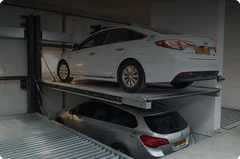


Managing multiple stacker parking lifts in a large - scale parking lot can be quite a challenge, but it's definitely doable with the right strategies. As a stacker parking lifts supplier, I've seen firsthand how different management approaches can make or break the efficiency of a big - time parking setup.
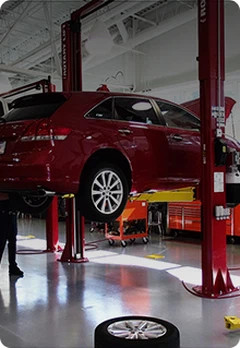
First off, let's talk about maintenance. Regular maintenance is the backbone of keeping these stacker parking lifts in top - notch condition. You don't just throw your hands up and hope for the best; you need a solid schedule. Plan out when each lift will get a thorough check - up. This isn't just a quick once - over. We're talking about inspecting the hydraulic systems, the cables, and the structural integrity of the lift itself.
For hydraulic systems, it's crucial to check the fluid levels and look for any signs of leaks. Low fluid levels can lead to reduced lift capacity and even complete failure. And if there are any leaks, you've got to patch them up immediately. A small leak can turn into a big problem in no time. Also, the cables that are responsible for raising and lowering the cars should be inspected for fraying or excessive wear. Replace them if necessary because a frayed cable is a safety hazard waiting to happen.
Now, when it comes to the software control of these stacker parking lifts, it's all about keeping it up - to - date. Most modern stacker parking lifts come with advanced software that manages things like the movement of the lifts, the assignment of parking spaces, and the overall traffic flow within the parking lot. You need to make sure this software is regularly updated to take advantage of the latest security features and bug fixes. An outdated software system can lead to glitches, errors, and in worst - case scenarios, a complete breakdown of the parking lift management.
Another important aspect is training your staff. Your employees need to be well - versed in operating and servicing these stacker parking lifts. It's not enough to just give them a quick rundown on the first day. Provide comprehensive training programs that cover everything from basic operations to emergency procedures. Make sure they know how to handle different models of stacker parking lifts that you might have in your parking lot. For example, our Two Post Tiltable Parking Lift has some unique features that your staff should be familiar with.
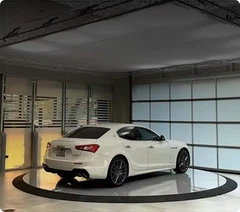
The layout and configuration of the parking lot also play a huge role in managing multiple stacker parking lifts. You've got to plan the placement of the lifts in a way that maximizes the use of space and minimizes traffic congestion. Think about how cars will enter and exit the parking lot, and how they'll move around between the different stacker parking lifts. A well - thought - out layout can significantly improve the overall efficiency of the parking lot.
When you're dealing with a large - scale parking lot, you're likely to have a mix of different stacker parking lift models. For instance, the DAXLIFTER 2.3t - 3.2t 2.1m Home 2 Double Car Vehicle Storage Stacker Parking Lift is great for home - like setups and can also be used in large lots for specific purposes. On the other hand, the 4 Post Automotive Storage Car Lift offers more stability and can handle heavier vehicles. You need to understand the capabilities of each model and place them in the parking lot where they'll be most effective.
Safety is non - negotiable. Install proper safety features in and around the stacker parking lifts. This includes things like emergency stop buttons, safety barriers, and warning signs. Make sure your staff and the public are aware of these safety measures. Conduct regular safety drills so that everyone knows what to do in case of an emergency. Remember, a safe parking lot is an attractive one for customers.


Also, it's important to keep an eye on the user experience. Customers should be able to easily find a parking space, park their cars, and retrieve them without any hassle. You can use technologies like smart signage and mobile apps to make the process more user - friendly. The better the user experience, the more satisfied your customers will be, and the more likely they'll return to your parking lot.
Let's talk about data management. Use data analytics to monitor the performance of your stacker parking lifts. Keep track of things like the number of times each lift is used, the average time a car spends in the parking lot, and any maintenance issues that arise. This data can help you identify trends and make informed decisions. For example, if you notice that a particular lift is used much more frequently than the others, you might need to schedule more frequent maintenance for it.
In terms of energy management, modern stacker parking lifts are designed to be more energy - efficient. But you can still take steps to further reduce energy consumption. For example, use sensors to turn off the lifts when they're not in use. Also, make sure the lighting in the parking lot is energy - efficient. This not only saves you money on energy bills but also makes your parking lot more environmentally friendly.
Finally, consider the long - term needs of your parking lot. As the demand for parking may change over time, you should be prepared to adjust your stacker parking lift management accordingly. You might need to add or remove lifts, or upgrade the existing ones. Stay in touch with your stacker parking lift supplier (like us!) to get the latest information on new models and technologies.
If you're looking to set up or improve the management of multiple stacker parking lifts in a large - scale parking lot, we're here to help. Whether you're interested in our DAXLIFTER Home 4 Post Auto Car Hoist Stacker Parking Lift with Custom Service or the DAXLIFTER 4 Four Post Indoor Outdoor Commercial Vehicle Parking Lift, we've got a wide range of options to suit your needs. Reach out to us for a detailed consultation and let's start optimizing your parking lot today.
References
- Industry best practices for stacker parking lift management
- Manufacturer's guidelines for maintenance and operation of stacker parking lifts


