





Hey there! As a car elevator supplier, I've been getting a lot of questions lately about the lighting requirements for car elevators. It's a crucial aspect that often gets overlooked, but it plays a huge role in ensuring safety, functionality, and a good overall experience for users. So, let's dive right in and explore what those lighting requirements are.
First off, why is lighting so important in a car elevator? Well, think about it. When you're driving your car into an elevator, you need to be able to see clearly. You have to line up your vehicle properly, make sure you're not hitting the sides, and be aware of any obstacles. Good lighting also helps in case of an emergency. If something goes wrong and you need to evacuate, you'll want to be able to find your way out quickly and safely.
General Lighting Requirements
One of the most basic requirements is to have uniform lighting throughout the elevator cabin. You don't want any dark spots where you can't see properly. The lighting should be bright enough to illuminate the entire area, including the floor, walls, and ceiling. A common standard is to have an illuminance level of at least 100 lux on the floor of the elevator. Lux is a unit of measurement for illuminance, which basically tells you how much light is falling on a surface.
For the walls and ceiling, a slightly lower illuminance level is acceptable, but it should still be enough to provide a good visual reference. You don't want the walls to be so dark that they create a sense of claustrophobia. A level of around 50 - 70 lux on the walls and ceiling is usually a good target.
Lighting for Entrance and Exit
The entrance and exit areas of the car elevator are also critical when it comes to lighting. You need to have bright lights at these points to guide drivers in and out safely. As they approach the elevator, they should be able to clearly see the opening, the floor level, and any markings or signs.
For the entrance, it's a good idea to have additional lighting fixtures installed above the opening. These can be floodlights or spotlights that provide a wide and even spread of light. The illuminance at the entrance should be at least 150 lux to ensure good visibility.
At the exit, the same level of lighting is required. Drivers need to be able to see where they're going as they leave the elevator. This is especially important if the elevator opens into a dimly lit parking area or a hallway.
Lighting for Safety and Signage
Safety is always a top priority, and lighting plays a big role in this. You need to have proper lighting for any safety signs or emergency exits. These signs should be clearly visible at all times, even in the event of a power outage.
For safety signs, you can use backlit signs or signs with built - in LED lights. The illuminance on the signs should be high enough to make them stand out. A good rule of thumb is to have an illuminance of at least 50 lux on the sign itself.
Emergency exit lights are also crucial. These should be powered by a backup battery system so that they remain operational even if the main power fails. They should be clearly marked and placed at regular intervals along the path to the exit.
Special Lighting Considerations
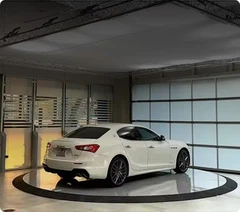
If your car elevator has any special features, such as a DAXLIFTER Customized Car Vehicle Rotary Rotating Stage Platform, you'll need to consider additional lighting requirements. For example, a rotating platform needs to have lighting that can follow the rotation and provide consistent illumination.
You might need to install adjustable lighting fixtures that can be angled to cover the entire platform as it turns. This ensures that drivers can always see what's going on around them, even when the platform is in motion.
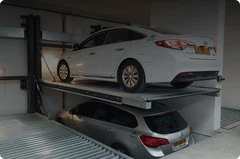
Similarly, if you have a Floor To Floor Car Lift Platform, you need to ensure that the lighting is consistent between different floors. As the elevator moves up and down, there should be no sudden changes in lighting that could disorient the driver.
Lighting Color and Quality
The color of the light also matters. You want to use a color temperature that is comfortable for the eyes and provides good visibility. A color temperature of around 4000 - 5000 Kelvin is often recommended for car elevators. This is a cool white light that is similar to natural daylight and helps to reduce eye strain.
In terms of light quality, you should use high - quality LED lights. LED lights are energy - efficient, have a long lifespan, and provide a consistent and even light output. They also generate less heat compared to traditional incandescent or fluorescent lights, which is important in a confined space like a car elevator.
Maintenance and Inspection
Once you have installed the lighting in your car elevator, it's important to have a regular maintenance and inspection schedule. Lights can burn out or malfunction over time, and you don't want to be caught off guard with a dark elevator.
Check the lights at least once a month to make sure they are all working properly. Replace any bulbs or fixtures that are not functioning correctly. You should also clean the light fixtures regularly to remove any dust or dirt that could reduce the light output.
Well, that's a pretty comprehensive look at the lighting requirements for a car elevator. As a car elevator supplier, I know how important it is to get these details right. If you're in the market for a car elevator or need to upgrade the lighting in your existing one, I'd love to have a chat with you. Whether you're looking for a standard elevator or a customized solution like the DAXLIFTER Customized Car Vehicle Rotary Rotating Stage Platform or Floor To Floor Car Lift Platform, we can work together to ensure that your lighting needs are met.


So, don't hesitate to reach out if you have any questions or want to discuss your specific requirements. Let's make sure your car elevator is well - lit, safe, and functional!
References
- Lighting Handbook: Reference and Application, 10th Edition
- National Fire Protection Association (NFPA) Codes and Standards related to elevator safety
- International Electrotechnical Commission (IEC) standards for lighting in confined spaces


