








When it comes to designing a parking system for a hospital, there are numerous special considerations that must be taken into account. As a parking system supplier, I have witnessed firsthand the unique challenges and requirements that hospitals present. In this blog post, I will delve into the key design aspects that are crucial for creating an efficient, safe, and user - friendly hospital parking system.
1. Accessibility and Proximity
One of the most important design considerations for a hospital parking system is accessibility. Patients, visitors, and medical staff need to be able to reach the hospital easily from the parking area. The parking facility should be located as close as possible to the hospital entrances. This reduces the walking distance, which is especially important for patients who may have limited mobility.
For ambulances and emergency vehicles, dedicated access routes and parking spaces are essential. These routes should be wide enough to accommodate large vehicles and should be clearly marked. Ambulance bays should be located near the emergency department, allowing for quick transfer of patients from the ambulance to the hospital.
In addition, accessible parking spaces for people with disabilities must be provided in accordance with local regulations. These spaces should be close to the hospital entrances and have proper signage and wheelchair ramps.
2. Capacity and Flexibility
Hospitals have a high volume of traffic, including patients, visitors, and staff. Therefore, the parking system must have sufficient capacity to meet the demand. However, predicting the exact number of vehicles can be challenging, as it can vary depending on the time of day, day of the week, and the type of medical services offered.
A flexible parking system is crucial. It should be able to adapt to different traffic patterns. For example, during peak hours, such as visiting hours or when there are large - scale medical events, the system should be able to handle the increased volume of vehicles. One way to achieve this is by using a multi - level parking system.
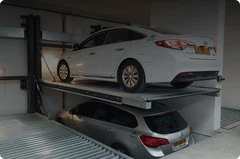
The DAXLIFTER 2 Level Customized Multi - platform Semi Automatic Car Parking System is an excellent option for hospitals. It can significantly increase the parking capacity within a limited space. This semi - automatic system allows for efficient use of vertical space, providing more parking spots without the need for a large horizontal footprint.
3. Safety and Security
Safety is of utmost importance in a hospital parking system. The parking area should be well - lit to ensure visibility at all times. Adequate lighting reduces the risk of accidents and also enhances security. CCTV cameras should be installed throughout the parking facility to monitor activities and deter criminal behavior.
There should be clear traffic flow patterns to prevent congestion and reduce the risk of collisions. One - way traffic systems can be implemented to ensure smooth movement of vehicles. Pedestrian walkways should be clearly marked and separated from vehicle lanes to protect patients, visitors, and staff.
Emergency exits should be clearly marked and easily accessible. In case of a fire or other emergencies, people should be able to evacuate the parking area quickly and safely.
4. Integration with Hospital Systems
A well - designed hospital parking system should be integrated with the hospital's overall systems. This includes integrating with the hospital's security system, so that security personnel can monitor the parking area from a central location. It can also be integrated with the hospital's information system to provide real - time information about available parking spaces.
For example, a digital signage system can be installed at the entrance of the parking facility, displaying the number of available parking spaces on each level. This helps drivers quickly find an available spot, reducing the time spent searching for parking and minimizing traffic congestion.
5. User - Friendliness
The parking system should be easy to use for all users, including patients, visitors, and staff. Clear signage should be provided throughout the parking area, indicating the location of different levels, entrances, exits, and parking spaces. Payment systems should be simple and convenient. Options such as cash, credit card, and mobile payment should be available.
For patients who may be in a hurry or have limited mobility, the parking system should offer features such as valet parking. Valet parking can be especially beneficial for patients who are arriving for medical appointments or are being discharged from the hospital.
6. Environmental Considerations
In today's world, environmental considerations are becoming increasingly important. A hospital parking system should be designed with sustainability in mind. This can include the use of energy - efficient lighting systems, such as LED lights, which consume less energy and have a longer lifespan.
Rainwater harvesting systems can be installed to collect and reuse rainwater for irrigation or other non - potable uses. Green roofs can also be incorporated into the design of the parking structure, which helps to reduce the heat island effect and improve air quality.
7. Maintenance and Durability
The parking system should be designed for easy maintenance. The materials used in the construction of the parking facility should be durable and able to withstand the wear and tear of daily use. Regular maintenance is essential to ensure the safety and functionality of the parking system.

For example, the DAXLIFTER Multi - level Customized Smart Automatic Multi - platform Car Parking System is designed for easy maintenance. It has a modular design, which allows for quick and easy replacement of parts if needed. This reduces downtime and ensures that the parking system is always in good working condition.


