






Hey there! As a supplier of parking hoists, I often get asked about the power consumption of these nifty machines in different operating modes. It's a crucial question, especially when you're looking to manage costs and make your parking facility as energy - efficient as possible. So, let's dig into it!
Understanding Parking Hoist Basics
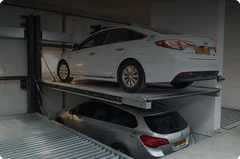
First off, for those who aren't super familiar with parking hoists, they're essentially mechanical devices designed to stack cars vertically or move them horizontally to make the most of limited parking space. They come in all sorts of shapes and sizes, like the DAXLIFTER 2.3T Car Garage Scissor Parking Lift, the DAXLIFTER 4 Four Post Indoor Outdoor Commercial Vehicle Parking Lift, Two Post Hydraulic Parking Elevator, Two Post Tiltable Parking Lift, and 4 Post Automotive Storage Car Lift.
Idle Mode
Let's start with the idle mode. In this mode, the parking hoist is just sitting there, waiting for its next task. The power consumption here is relatively low because most of the electrical components are in standby. The motors aren't running actively, but there are still some systems that need a tiny bit of power to stay operational, like the control panel, sensors, and sometimes a ventilation system for the hoist's mechanical parts.
Think of it like your TV when it's on standby. It's not doing much, but it still sucks in a little bit of electricity. On average, a typical parking hoist in idle mode might consume anywhere from 50 to 200 watts, depending on its size and the complexity of its control systems. Smaller hoists, like the scissor - type ones, usually have a lower idle power draw. They're simpler in design, so they don't need as much juice to stay in standby. Meanwhile, larger commercial multi - level parking hoists with more advanced control and safety features can be on the higher end of that spectrum.
Lifting Mode
Now, the lifting mode is where things get interesting. This is when the hoist is actually doing its job of moving cars up or down. The power consumption shoots up significantly because the hoist has to overcome the force of gravity to lift the vehicle. The amount of power used during lifting depends on a few key factors.


The first is the weight of the car being lifted. Obviously, a heavier car takes more energy to lift than a lighter one. A standard mid - size sedan might weigh around 1500 kg, while a large SUV could tip the scales at 2500 kg or more. To handle these different weights, the motor in the parking hoist has to work harder for heavier vehicles.
Another factor is the lifting speed. If you've set the hoist to lift cars quickly, it will draw more power compared to a slower lifting speed. On average, during the lifting process, a parking hoist can consume anywhere from 2 to 10 kilowatts. That's a big jump from the idle mode! For example, a scissor - parking lift might use around 2 - 4 kW, while a larger four - post or multi - level hoist could use 6 - 10 kW or even more, especially if it's lifting a heavy vehicle at a high speed.
Lowering Mode
The lowering mode is a bit different from lifting. When the hoist is lowering a car, gravity is on its side. This means that the power consumption is generally lower than in the lifting mode. However, the hoist still needs to control the descent speed to ensure a safe and smooth operation.
Most modern parking hoists use a system to regenerate energy during the lowering process. This involves using the weight of the car and the motion of the hoist to generate a small amount of electricity. On average, the power consumption in lowering mode can be anywhere from 0.5 to 3 kilowatts. The energy - regeneration feature can reduce the overall power draw, especially in larger systems that are designed to be more energy - efficient.
Factors Affecting Power Consumption
Apart from the operating modes, there are other factors that can impact the power consumption of a parking hoist. One of them is the efficiency of the motor. A high - efficiency motor will use less energy to perform the same task compared to an old or low - quality motor. It's like having a fuel - efficient car; it just gets more done with less energy.
The quality of the mechanical components also matters. If the gears, chains, and hydraulic systems are well - maintained and have low friction, the hoist will require less power to operate. Regular maintenance, like lubricating the moving parts and checking the alignment of the hoist, can go a long way in reducing power consumption.
The environment in which the hoist is located can also play a role. If the temperature is extremely high or low, the hoist's systems might have to work harder to maintain proper operation. For example, in cold weather, the hydraulic fluid might thicken, which can increase the load on the hydraulic pump and thus increase power consumption.
Comparing Different Types of Parking Hoists
Let's take a quick look at how different types of parking hoists stack up in terms of power consumption.
Scissor parking lifts, like the DAXLIFTER 2.3T Car Garage Scissor Parking Lift, are relatively simple in design. They usually have a single motor and a straightforward scissor mechanism. Their power consumption in lifting mode is generally on the lower end compared to larger hoists, and in idle mode, they're also quite energy - efficient.
Four - post parking lifts, such as the DAXLIFTER 4 Four Post Indoor Outdoor Commercial Vehicle Parking Lift, are often used for commercial applications. They can handle larger vehicles and usually have more advanced control systems. This means that their power consumption in lifting and lowering modes can be higher, especially if they're used to lift heavy trucks or SUVs.
Two - post hydraulic parking elevators, like the Two Post Hydraulic Parking Elevator, are known for their stability and lifting capacity. They use a hydraulic system to lift the vehicles, and the power consumption depends on the size of the hydraulic pump and the weight of the load. In general, they have a moderate power draw, but it can increase significantly if they're used intensively.
Two - post tiltable parking lifts, as the name suggests, can tilt the vehicle. This requires additional mechanical and control systems, which can add to the power consumption. However, they can be very useful in certain situations where unique parking configurations are needed.
The 4 Post Automotive Storage Car Lift is great for long - term vehicle storage. Its power consumption is mainly influenced by the size of the motors and the frequency of use. If it's used infrequently, the overall power consumption will be relatively low.
Managing Power Consumption
If you're running a parking facility, managing the power consumption of your parking hoists can save you a lot of money in the long run. Here are a few tips:
First, use the hoists efficiently. Try to group cars by weight and size so that the hoist doesn't have to waste energy lifting a light car with a motor that's designed for heavy loads.
Second, invest in high - efficiency motors and equipment. Although they might cost more upfront, they'll pay for themselves in energy savings over time.
Finally, perform regular maintenance. This will keep the hoist running smoothly and reduce the chances of power - hungry malfunctions.
Conclusion
So, there you have it! The power consumption of a parking hoist varies greatly depending on the operating mode, the type of hoist, and several other factors. By understanding these factors and taking steps to manage power consumption, you can make your parking facility more energy - efficient and cost - effective.
If you're in the market for a parking hoist or want to learn more about how to optimize the power consumption of your existing hoists, don't hesitate to get in touch. We're here to help you find the best solution for your parking needs.
References
- "Parking Equipment Handbook", Industry Press, 2020
- Research papers on energy efficiency in mechanical parking systems from various engineering journals.


