






When it comes to considering the price range of a rotary stage, numerous factors come into play. As a long - standing rotary stage supplier, I'm here to break down these elements and give you a comprehensive understanding of what impacts the cost.
Elements Affecting the Price of Rotary Stages
1. Size and Load Capacity
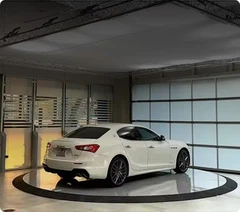
The physical dimensions of a rotary stage are a significant determinant of its price. Larger rotary stages naturally require more raw materials for construction, and they also need to be engineered to handle greater forces and stresses. For instance, heavy - duty rotary stages designed to support large industrial equipment or vehicles have thicker, more robust frames and larger bearings. These high - capacity stages can cost substantially more than their smaller, lighter - duty counterparts. A small - scale rotary stage with a load capacity of a few hundred kilograms might be on the lower end of the price spectrum. However, a large - scale DAXLIFTER Customized Car Vehicle Rotary Rotating Stage Platform that can handle the weight of multiple cars will be much more expensive due to its size and the need for high - strength materials and advanced engineering.
2. Precision and Accuracy
The level of precision and accuracy required in a rotary stage is another crucial factor. In industries such as semiconductor manufacturing or precision optics, even the slightest deviation can lead to significant product failures. Rotary stages used in these applications need to have extremely high precision, with angular positioning accuracies in the arc - second or even sub - arc - second range. Achieving such high levels of precision requires advanced manufacturing techniques, high - quality components, and rigorous quality control processes. As a result, precision rotary stages can be several times more expensive than those with lower precision requirements.
3. Drive Mechanisms
The type of drive mechanism employed in a rotary stage also affects its price. There are several common drive mechanisms, each with its own advantages and cost implications.
- Belt - Driven Rotary Stages: Belt - driven systems are relatively simple and cost - effective. They are suitable for applications where high speed and moderate precision are required. The belts are typically made of rubber or synthetic materials, and the drive system is easy to install and maintain. As a result, belt - driven rotary stages are often on the lower end of the price range, making them a popular choice for budget - conscious customers.
- Gear - Driven Rotary Stages: Gear - driven systems offer higher torque and better precision compared to belt - driven systems. They are commonly used in applications where the stage needs to move heavy loads or where accurate positioning is critical. However, the manufacturing process for gears is more complex, and the gears themselves require high - quality materials to ensure long - term durability. This makes gear - driven rotary stages more expensive than belt - driven ones.
- Direct - Drive Rotary Stages: Direct - drive systems provide the highest level of precision and performance. They eliminate the need for intermediate transmission components such as belts or gears, which reduces backlash and improves dynamic response. Direct - drive rotary stages are often used in high - end applications such as aerospace testing and high - precision metrology. However, the advanced motor technology and sophisticated control systems required for direct - drive stages make them the most expensive option.
4. Control and Automation Features
In today's industrial environment, many rotary stages are equipped with advanced control and automation features. These features can greatly enhance the stage's functionality and productivity but also add to its cost.
- Basic Manual Controls: Rotary stages with basic manual controls are the simplest and most affordable option. They typically consist of a hand - wheel or a lever for adjusting the position of the stage. These types of stages are suitable for applications where the movement is infrequent and does not require high - precision positioning.
- Motorized Controls with Simple Programmability: Motorized rotary stages with simple programmable controls allow for automated movement and positioning. They can be controlled via a basic controller or a computer interface, and users can set specific angles or positions for the stage to move to. These stages are more expensive than manual ones but offer greater convenience and productivity.
- Advanced Automation and Integration: High - end rotary stages may be integrated into complex automation systems. They can be controlled using industrial controllers, programmed using sophisticated software, and interfaced with other equipment such as sensors, cameras, or robots. These advanced automation features require significant engineering and development efforts, making the stages more expensive.
Price Ranges in the Market
Low - End Rotary Stages
Low - end rotary stages typically range from a few hundred to a couple of thousand dollars. These stages are usually small in size, have a relatively low load capacity, and offer basic precision and functionality. They are often used in educational institutions, small - scale research projects, or hobbyist applications. For example, a simple belt - driven rotary stage with manual controls and a load capacity of up to 100 kg might cost around $500 - $1500.
Mid - Range Rotary Stages
Mid - range rotary stages, which offer a good balance between performance and cost, can range from a few thousand to tens of thousands of dollars. These stages are commonly used in industrial applications such as light - manufacturing, assembly, and inspection. A gear - driven rotary stage with motorized controls, a medium load capacity (up to 500 kg), and moderate precision (angular accuracy in the arc - minute range) might cost between $3000 - $10,000.
High - End Rotary Stages
High - end rotary stages, designed for the most demanding applications, can cost tens of thousands to hundreds of thousands of dollars. These stages are used in industries such as semiconductor manufacturing, aerospace, and high - precision metrology. A direct - drive rotary stage with sub - arc - second precision, advanced automation features, and a high load capacity (over 1000 kg) could easily cost over $50,000.


Specialized Rotary Stages and Their Pricing
In addition to the general price ranges mentioned above, there are also specialized rotary stages that come with unique features and price points.
Car - Related Rotary Stages
DAXLIFTER Customized Car Vehicle Rotary Rotating Stage Platform is an example of a specialized rotary stage. These platforms are used in parking facilities, automotive showrooms, or car repair shops. The price of a car rotary stage depends on factors such as its size (to accommodate different types of vehicles), load capacity, and the level of automation. A basic car rotary stage for a single - car parking application might start at around $10,000, while a large - scale, fully automated platform for a multi - car showroom could cost upwards of $50,000.
Floor - to - Floor Car Lift Platforms
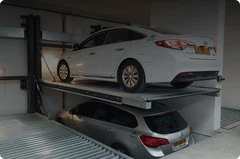
Floor To Floor Car Lift Platform is another specialized type. These platforms are used to move cars between different floors in a building, such as in a multi - level parking garage or a car dealership. The price of a floor - to - floor car lift platform is influenced by factors such as the height of the lift, the load capacity, and the safety features. A small - scale, single - car lift for a two - story building might cost around $20,000 - $30,000, while a larger, high - capacity lift for a multi - story parking structure could cost well over $100,000.
Contact Us for Purchase and Consultation
If you're in the market for a rotary stage, whether it's a standard model or a specialized one, we're here to help. Our team of experts has in - depth knowledge of rotary stage technology and can assist you in selecting the right product for your specific needs. We offer a wide range of rotary stages with different specifications and price points to meet various budgets.
To learn more about our products, request a quote, or discuss custom - made solutions, feel free to reach out to us. We look forward to working with you and providing you with high - quality rotary stage products and services.
References
- Industrial Automation Handbook
- Precision Motion Control Technology


