




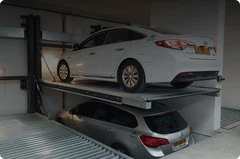


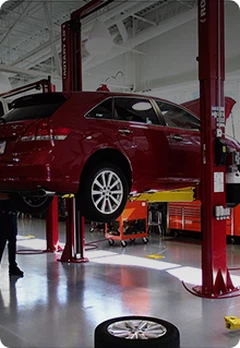

I. Preparing to Use a Car Service Lift
1. Check Equipment Condition:
- Ensure the lift's power supply, hydraulic system, and mechanical structure are functioning properly and that lubrication oil is sufficient.
- Select a lift with the appropriate load capacity based on the vehicle's weight (common load capacity is 3-5 tons, refer to "GB/T 3811-2008 Crane Design Specification").
2. Clear the Work Area:
- Remove debris from the floor and ensure there are no people or obstacles under the lift platform.
3. Position the Vehicle:
- Slowly drive the vehicle into the center of the lift, aligning the tires with the boom support points (some models require adjusting the boom length to the wheel spacing).
II. Detailed Operation Steps
1. Start the Lift:
- Press the power button on the control panel and confirm that the indicator light is on.
- In manual mode, press and hold the "Raise" button until the vehicle is 10-15 cm off the ground. Pause to check that the support is secure.
2. Lifting the Vehicle:
- Continue operating to the target height (typical maintenance height is 1.5-1.8 meters), ensuring the locking device is engaged.
- For two-post lifts, adjust both lifting arms simultaneously to prevent tilt (the tolerance must be within ±2 cm).
3. Lowering Procedure:
- After clearing tools and personnel, slowly press the "lower" button. Ensure the vehicle has landed smoothly before driving away.
III. Safety Precautions
- Do not overload: Overloading may cause the hydraulic system to rupture (e.g., a 3-ton lift must not lift a 3.5-ton vehicle).
- Emergency Measures: In the event of a sudden power outage, immediately activate the mechanical locking valve (the red knob on the side of the equipment).
- Regular Maintenance: Check the hydraulic oil level monthly and have the equipment inspected for safety annually by a professional organization (refer to "JB/T 5323-2017 Hydraulic Lift").
IV. Common Problem Solving
1. The lift cannot start: Check the circuit fuse or hydraulic pump pressure (normal value is 20-25MPa).
2. Shaking after lifting: Re-adjust the center of gravity of the vehicle to ensure that the four-wheel support is evenly stressed.
Through standardized operation and regular maintenance, the car service lift can greatly improve the maintenance efficiency and safety. If long-term operation is required, it is recommended to use a safety bracket as a secondary insurance.


