







Complete Practical‑Measurement Guide For Car Rotary Platform Installation Space
We frequently receive customer enquiries regarding how to measure available space and determine reserved dimensions for a car rotary platform. This step is extremely critical. Inaccurate measurements may result in the turntable failing to fit, or the vehicle binding and scraping against walls during rotation, which directly ruins day‑to‑day user experience.
Drawing on many years of field‑installation experience, this article shares a hands‑on step‑by‑step measurement workflow. All key details and common pitfalls are covered. Home‑users can carry out these checks without specialist assistance.
Basic Compatibility Logic For Residential Car Rotary Platforms
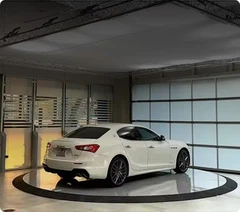
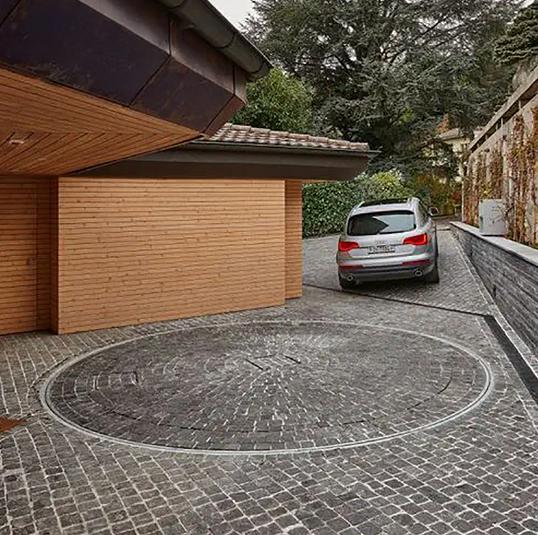
Most mainstream residential car rotary platforms support smooth 360‑degree full rotation and work well with ordinary passenger cars and SUVs. Different turntable models have minor dimensional variations, yet core space‑measurement and clearance‑reservation standards remain universal. Prioritise accurate site measurements first; equipment‑model selection will then become straightforward.
Step 1: Precisely Measure Vehicle Dimensions And Reserve Safety Clearances
Your vehicle's length, width and height form the baseline for calculating required turntable space. Use a reliable tape measure to collect accurate figures.
-
Vehicle length: Measure from the very front bumper point all the way to the rearmost edge of the rear bumper.
-
Vehicle width: Measure across the outermost tips of side‑view mirrors (mirrors included) to prevent scraping during rotation.
-
Vehicle height: Vertical distance from ground up to the highest point on the vehicle body. For SUVs and vehicles fitted with roof racks, take measurements at the absolute highest position.
Critical safety‑margin requirement: Never specify the turntable purely according to bare vehicle dimensions. To guarantee smooth vehicle entry‑exit and unobstructed 360‑degree rotation without jamming or edge‑scraping, we recommend reserving 30‑46 cm of extra clearance on all four sides (front, rear, left and right). This proven practical margin makes parking easy for both new and experienced drivers and minimises collision risks.
Step 2: Confirm Space Requirements Based On Your Car Rotary Platform Type
Different car rotary‑platform constructions impose distinct spatial prerequisites, verify these before finalising your model choice.
-
Manual or fully‑automatic turntable: The primary requirement is unobstructed rotational clearance. No walls, pillars, water‑pipes or debris may occupy the surrounding zone. Ensure nothing blocks complete 360‑degree vehicle rotation.
-
Electric car rotary platform: In addition to rotational free space, allocate dedicated mounting positions for power supply wiring and control panels. Plan cable routing and equipment placement in advance to avoid cramped installations, pinched wiring and subsequent operational failures.
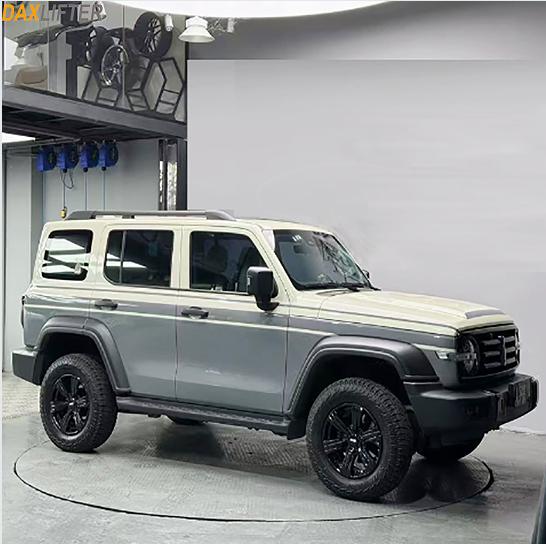
Step 3: Measure Actual Installation‑Site Dimensions And Evaluate Ground Conditions
Once vehicle data is finalised, physically survey your intended installation spot, normally a garage or flat courtyard area. Focus on two key factors: ground quality and overall available space.
First, the substrate must be flat, level and structurally solid. Uneven ground will trigger turntable binding, abnormal noise and premature breakdowns. Vehicles will sit tilted while driving onto or off the unit, creating safety hazards. Level out sloped or pitted surfaces before installation if needed.
Second, compare measured site length‑and‑width against vehicle dimensions plus all‑round safety clearances. Confirm the available area exceeds the total footprint demanded by the turntable plus rotating vehicle envelope.
For indoor garage installations, also measure ceiling height. Especially for SUVs, off‑road vehicles and roof‑rack‑equipped cars, sufficient overhead clearance must exist to eliminate roof‑scraping risks while the turntable spins.
Step 4: Measure Access‑Way Dimensions For Unrestricted Vehicle Entry
Many buyers only measure the turntable zone and overlook entry passageways. Consequently vehicles cannot drive onto the platform, resulting in wasted time and effort.
Measure door‑opening and aisle widths leading to the turntable area. Dimensions should comfortably accommodate the full vehicle, not just match bare body width. Factor in vehicle turning radius and reserve enough forward‑manoeuvre room, so the automobile can drive smoothly onto the turntable without repeated reverse‑and‑adjust cycles.
Step 5: Verify Floor Load‑Bearing Capacity To Avoid Safety Risks
A car rotary platform itself carries considerable dead‑weight plus the full mass of a parked vehicle. Load‑bearing capacity is one of the most frequently overlooked yet vital safety considerations.
Ground‑floor concrete slabs within courtyards generally satisfy load requirements with no extra work needed. For basements, second‑storey or attic garages, consult a structural engineer to assess slab load ratings. Confirm the floor can safely support combined turntable‑and‑vehicle weight and prevent cracking or collapse hazards.
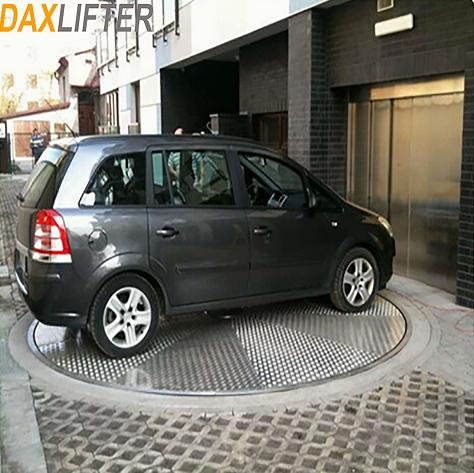
Step 6: Plan Ahead For Future Vehicle‑Upgrade Requirements
A car rotary platform represents permanent long‑term installation. Do not only measure for your present‑day vehicle.
If you may later upgrade to larger‑size SUVs or MPVs, set your measurements and reserved clearances according to that bigger‑vehicle scenario. This prevents situations where your existing turntable becomes unusable after buying a new car and saves you replacement expense and labour.
Step 7: Double‑Check All Dimensions To Eliminate Measuring Errors
Measurement mistakes from mis‑read tape readings or mis‑selected reference points can lead to failed installations. After completing all surveys, repeat each measurement at least twice and cross‑validate results. Whenever practical, ask another person to re‑measure independently for double verification, minimising measurement deviations and guarantee precise figures.
Summary
The core workflow for car rotary‑platform space measurement can be summarised: obtain accurate vehicle measurements, reserve proper safety clearances, match platform‑type requirements, audit access‑passage dimensions, confirm floor load‑bearing capacity, anticipate future‑vehicle needs and repeatedly cross‑check data. By following these procedures you can correctly match a turntable for your property and automobile, ensuring smooth rotation and safe long‑term operation.
If you are uncertain about dimensions or cannot decide between manual and electric car rotary‑platform variants, feel free to get in touch. We deliver one‑on‑one tailored recommendations based on your site layout, vehicle type and application, helping you steer clear of common installation pitfalls and select the most suitable car turntable solution.
Request Custom Car Rotary Platform Project Solutions From DAXLIFTER
WhatsApp / Phone: +86 15192782747
Email: sales@daxlifter.com
Share your site dimensions and vehicle specifications, and receive detailed datasheets plus exclusive project quotations for your car‑turntable installation project!


