






The question of whether stacker parking lifts can be used in cold climates is a crucial one for many businesses and individuals seeking efficient parking solutions in regions with harsh winters. As a leading supplier of stacker parking lifts, we understand the importance of addressing this concern to ensure our customers make informed decisions. In this blog post, we will delve into the technical aspects, challenges, and solutions related to using stacker parking lifts in cold climates.
Technical Considerations
Stacker parking lifts operate based on a combination of mechanical, electrical, and hydraulic systems. In cold climates, each of these components faces unique challenges.
Mechanical Components
Mechanical parts such as gears, chains, and bearings are essential for the smooth operation of stacker parking lifts. Cold temperatures can cause metal to contract, which may lead to changes in the clearances between moving parts. This can result in increased friction, wear and tear, and potentially lead to mechanical failures. For example, if the clearances between gears become too tight, the noise level during operation may increase, and the risk of tooth breakage may also rise.
Electrical Components
Electrical systems are equally vulnerable to cold temperatures. Batteries, in particular, are sensitive to the cold. The chemical reactions within a battery slow down as the temperature drops, reducing its capacity and ability to deliver power. This can lead to starting problems for electric - powered stacker parking lifts or cause issues with the operation of control panels. Additionally, cold temperatures can make electrical wires more brittle, increasing the risk of cracking and short - circuits.
Hydraulic Components
Hydraulic systems are commonly used in stacker parking lifts to provide the necessary lifting force. However, hydraulic fluids thicken in cold temperatures. This increased viscosity can impede the flow of the fluid, causing slower operation of the lift and putting additional strain on the hydraulic pump. If the hydraulic fluid is not properly formulated for cold temperatures, it may even solidify, rendering the lift inoperable.
Challenges in Cold Climates
Snow and Ice Accumulation
One of the most obvious challenges in cold climates is the accumulation of snow and ice on stacker parking lifts. Snow can add significant weight to the lift structure, which may exceed the lift's designed load capacity. Ice can form on moving parts, preventing them from operating smoothly. For instance, ice on guide rails can cause the lift platform to jolt or get stuck during movement.
Cold - Induced Corrosion
Cold temperatures combined with moisture from snow and ice can accelerate corrosion on the metal parts of stacker parking lifts. Corrosion can weaken the structure of the lift, compromise its safety features, and reduce its lifespan. Unprotected steel components are particularly susceptible to rust and pitting in these conditions.
Operational Efficiency
The reduced performance of mechanical, electrical, and hydraulic components in cold temperatures can significantly impact the operational efficiency of stacker parking lifts. Longer cycle times for lifting and lowering vehicles can lead to congestion in parking facilities, causing inconvenience for users and reducing the overall capacity of the parking system.
Solutions for Cold - Climate Use
Suitable Materials and Coatings
To combat cold - induced corrosion, we use high - quality materials and protective coatings on our stacker parking lifts. Stainless steel can be used for critical components that are exposed to moisture, as it has excellent corrosion resistance. Additionally, epoxy coatings can be applied to the steel structures to create a barrier between the metal and the environment, preventing rust formation.
Cold - Resistant Fluids
For hydraulic systems, we recommend using cold - resistant hydraulic fluids. These fluids are formulated to maintain their viscosity and flow properties at low temperatures, ensuring smooth operation of the lift even in freezing conditions. Regular fluid checks and changes are also essential to guarantee optimal performance.
Insulation and Heating
To protect electrical components and prevent freezing of hydraulic fluids, insulation and heating systems can be installed. Insulation materials can be wrapped around cables and control panels to reduce heat loss. Heating elements can be added to hydraulic fluid reservoirs to keep the fluid at an appropriate operating temperature.
Maintenance and Training
Regular maintenance is key to ensuring the reliable operation of stacker parking lifts in cold climates. This includes lubricating moving parts, checking electrical connections, and inspecting for signs of corrosion or damage. We also provide training to our customers on proper cold - weather maintenance procedures, so they can keep their lifts in top condition throughout the winter months.
Our Product Offerings for Cold Climates
We offer a range of stacker parking lifts that are designed to withstand the challenges of cold climates.
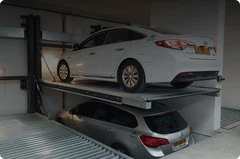
The DAXLIFTER 4 Four Post Indoor Outdoor Commercial Vehicle Parking Lift is a robust solution suitable for both indoor and outdoor use. Its heavy - duty construction and advanced control systems make it reliable even in harsh winter conditions. The four - post design provides excellent stability, and the lift is equipped with safety features to ensure the protection of vehicles and users.
The Two Post Tiltable Parking Lift is another option that offers flexibility and efficiency. Its tiltable design allows for easy access to vehicles, and it can be customized with cold - weather features such as insulation and heating.
For smaller garages or limited - space applications, the DAXLIFTER 2.3T Car Garage Scissor Parking Lift is an ideal choice. Despite its compact size, it is built to handle the rigors of cold climates, with high - quality materials and a reliable hydraulic system.


