






Hydraulic car elevators are a fascinating piece of engineering that play a crucial role in modern automotive facilities, from multi - story parking garages to high - end car showrooms. As a car elevator supplier, I am often asked about how these elevators work. In this blog, I will delve into the mechanics behind hydraulic car elevators, explaining the key components and the process that enables them to lift heavy vehicles safely and efficiently.
The Basic Principle of Hydraulics
At the heart of a hydraulic car elevator lies the principle of hydraulics. Hydraulics is based on Pascal's law, which states that when pressure is applied to an enclosed fluid, the pressure change is transmitted equally throughout the fluid. In a hydraulic car elevator system, this principle is used to generate the force required to lift a car.
The main components of a hydraulic system in a car elevator include a hydraulic cylinder, a hydraulic pump, a reservoir for the hydraulic fluid, and a control valve. The hydraulic fluid, usually oil, is stored in the reservoir. When the elevator needs to be lifted, the hydraulic pump is activated. The pump draws the hydraulic fluid from the reservoir and forces it into the hydraulic cylinder.
Components of a Hydraulic Car Elevator
-
Hydraulic Cylinder
The hydraulic cylinder is a critical component of the elevator. It consists of a piston inside a cylindrical tube. When the hydraulic fluid is pumped into the cylinder, it creates pressure on the piston. The piston then moves upward, and since the elevator platform is connected to the piston, the platform and the car on it are lifted. The size and design of the hydraulic cylinder determine the maximum weight that the elevator can lift. Larger cylinders can generate more force and are used for elevators designed to handle heavier vehicles.
-
Hydraulic Pump
The hydraulic pump is responsible for creating the pressure needed to move the hydraulic fluid. There are different types of hydraulic pumps, such as gear pumps, vane pumps, and piston pumps. Gear pumps are simple and cost - effective, while piston pumps are more efficient and can generate higher pressures. The pump is powered by an electric motor, which converts electrical energy into mechanical energy to drive the pump.
-
Reservoir
The reservoir stores the hydraulic fluid. It also serves as a place for the fluid to cool down and for any air bubbles in the fluid to rise to the surface. A proper reservoir design is important to ensure that the hydraulic system operates smoothly. It should have enough capacity to hold the required amount of fluid and allow for expansion and contraction of the fluid as the temperature changes.
-
Control Valve
The control valve is used to regulate the flow of the hydraulic fluid. It controls when the fluid is pumped into the cylinder to lift the elevator and when it is released to lower the elevator. The control valve can be manually operated or automated using electronic controls. In modern hydraulic car elevators, electronic control systems are often used to provide precise control over the elevator's movement, ensuring smooth and safe operation.

The Lifting Process
When a car is driven onto the elevator platform, the operator activates the elevator system. The control valve opens, and the hydraulic pump starts to draw the hydraulic fluid from the reservoir. The pump then forces the fluid into the hydraulic cylinder. As the fluid enters the cylinder, the pressure on the piston increases, causing the piston to move upward. This upward movement of the piston raises the elevator platform and the car on it.
The speed of the lift can be adjusted by controlling the flow rate of the hydraulic fluid. If a faster lift is required, the pump can be set to deliver more fluid per unit time. However, this needs to be balanced with safety considerations, as too high a speed can cause instability and potential damage to the elevator and the vehicle.
The Lowering Process
To lower the elevator, the control valve is adjusted to allow the hydraulic fluid to flow back into the reservoir. Gravity helps in the lowering process. As the fluid leaves the cylinder, the pressure on the piston decreases, and the elevator platform and the car gradually descend. The control valve ensures that the descent is smooth and controlled, preventing the elevator from dropping too quickly.
Safety Features
Safety is of utmost importance in hydraulic car elevators. There are several safety features built into the system to protect the vehicle and the operators.
-
Overload Protection
Most hydraulic car elevators are equipped with overload protection devices. These devices monitor the weight on the elevator platform. If the weight exceeds the rated capacity of the elevator, the system will prevent the elevator from operating, or it may stop the elevator if it is already in motion. This helps to prevent damage to the hydraulic components and ensures the safety of the vehicle and the people around it.
-
Emergency Stop Button
An emergency stop button is provided in a prominent location on the elevator control panel. In case of an emergency, such as a malfunction or a safety hazard, the operator can press this button to immediately stop the elevator's movement.
-
Safety Rails and Gates
Safety rails are installed around the elevator platform to prevent the vehicle from accidentally rolling off. Gates are also provided at the entrance and exit of the elevator to ensure that the vehicle is properly secured during the lifting and lowering process.
Applications of Hydraulic Car Elevators
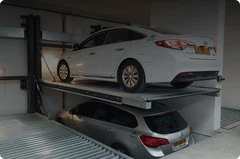
Hydraulic car elevators have a wide range of applications. In multi - story parking garages, they are used to transport cars between different floors, maximizing the use of limited space. They are also popular in car showrooms, where they can be used to display cars at different heights, creating an impressive visual effect.
If you are looking for a reliable car elevator solution, we offer a variety of products. Our Floor To Floor Car Lift Platform is designed for efficient vertical transportation of cars between floors. It is built with high - quality materials and advanced hydraulic technology to ensure smooth and safe operation.
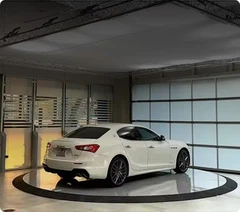
For those who need a more specialized solution, our DAXLIFTER Customized Car Vehicle Rotary Rotating Stage Platform is an excellent choice. This platform allows for 360 - degree rotation of the vehicle, which is ideal for car exhibitions and showrooms.
If you are interested in our car elevator products, we encourage you to contact us for a detailed discussion. Our team of experts can provide you with customized solutions based on your specific requirements. Whether you are building a new parking garage or upgrading your existing car showroom, we have the right elevator for you.


