








Rotating stages are a fascinating piece of engineering that have found applications in a wide range of industries, from entertainment and automotive to manufacturing and research. As a supplier of rotating stages, I've had the privilege of witnessing firsthand the innovative ways these devices are used and the impact they have on various operations. In this blog, I'll delve into the inner workings of rotating stages, exploring the technology behind them, their key components, and the factors to consider when choosing the right one for your needs.
The Basics of Rotating Stages
At its core, a rotating stage is a mechanical device designed to provide controlled rotational motion. It typically consists of a platform that can be rotated around a central axis, either manually or through the use of a motor. The rotation can be continuous or indexed, allowing for precise positioning at specific angles. Rotating stages are used to perform a variety of tasks, such as presenting objects for display, aligning components during manufacturing, or facilitating the movement of vehicles in parking structures.
How Rotating Stages Work
The operation of a rotating stage depends on its design and the type of drive mechanism used. Here are some of the most common types of rotating stages and how they work:
Manual Rotating Stages
Manual rotating stages are the simplest and most cost - effective type. They are operated by hand, usually through a crank or a knob. The user turns the crank, which is connected to a gear or a pulley system, to rotate the platform. These stages are ideal for applications where the rotation speed is low and the positioning accuracy requirements are not extremely high. For example, in a small art gallery, a manual rotating stage can be used to display sculptures, allowing visitors to view the artwork from different angles.
Motor - Driven Rotating Stages
Motor - driven rotating stages offer more precise control and higher rotational speeds compared to manual stages. They can be powered by different types of motors, such as stepper motors, servo motors, or DC motors.
- Stepper Motors: Stepper motors are commonly used in rotating stages because they provide precise control over the rotation angle. These motors move in discrete steps, and the controller can send a specific number of pulses to the motor to achieve the desired rotation. For instance, in a precision manufacturing process where a component needs to be rotated by exactly 90 degrees, a stepper motor - driven rotating stage can be programmed to make this exact movement.
- Servo Motors: Servo motors are known for their high torque and the ability to maintain a constant speed under varying loads. They use a feedback mechanism, such as an encoder, to monitor the position of the motor shaft and adjust the input signal accordingly. This makes them suitable for applications where high - speed rotation and accurate positioning are required, like in a large - scale entertainment production where a rotating stage needs to move quickly and smoothly.
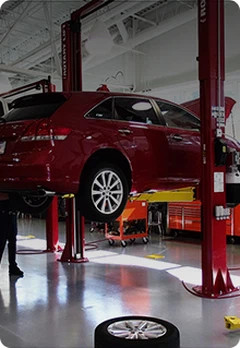
- DC Motors: DC motors are simple and cost - effective. They can be used in applications where the rotation speed does not need to be extremely precise. For example, in a small - scale automotive repair shop, a DC motor - driven rotating stage can be used to turn a vehicle for easier access to different parts.
Hydraulic and Pneumatic Rotating Stages
Hydraulic and pneumatic rotating stages use fluid power to generate rotational motion. In a hydraulic system, a hydraulic pump pressurizes a hydraulic fluid, which is then directed to a hydraulic motor or cylinder. The force generated by the fluid causes the platform to rotate. Pneumatic systems work in a similar way, but they use compressed air instead of hydraulic fluid. These types of rotating stages are often used in applications where high torque is required, such as in heavy - duty industrial machinery or large - scale parking structures.
Key Components of a Rotating Stage
A rotating stage is made up of several key components that work together to ensure smooth and accurate rotation. Here are the main components:
Platform
The platform is the surface on which the object to be rotated is placed. It can be made of different materials, such as steel, aluminum, or wood, depending on the application. The size and shape of the platform also vary depending on the requirements. For example, a rotating stage used for displaying small handicrafts may have a small circular platform, while a stage used for rotating vehicles may have a large rectangular platform.
Bearing
The bearing is a crucial component that supports the platform and allows it to rotate smoothly. There are different types of bearings used in rotating stages, such as ball bearings, roller bearings, and thrust bearings. Ball bearings are commonly used because they offer low friction and high precision. They consist of small balls that roll between two rings, reducing the contact area and allowing for easy rotation.
Drive Mechanism
As mentioned earlier, the drive mechanism is responsible for providing the rotational force. It can be a manual crank, a motor, or a hydraulic/pneumatic system. The choice of drive mechanism depends on the application requirements, such as the required rotation speed, torque, and positioning accuracy.
Controller
In motor - driven rotating stages, a controller is used to control the operation of the motor. The controller can be a simple on/off switch or a more complex programmable device. It allows the user to set the rotation speed, direction, and angle of the platform. For example, in a CNC machining center, a programmable controller can be used to precisely control the rotation of a workpiece during the machining process.
Applications of Rotating Stages
Rotating stages have a wide range of applications across different industries:
Entertainment Industry
In the entertainment industry, rotating stages are used in theaters, concerts, and live shows to create dynamic and engaging visual effects. They can be used to rotate performers, props, or entire sets, adding an extra element of excitement to the performance. For example, in a musical theater production, a rotating stage can be used to quickly change the scenery between scenes, giving the audience a seamless viewing experience.
Automotive Industry
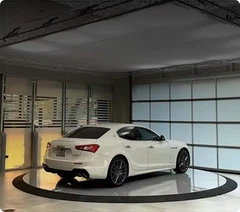
In the automotive industry, rotating stages are used in parking structures to save space and improve the efficiency of vehicle parking. DAXLIFTER Customized Car Vehicle Rotary Rotating Stage Platform is a great example of a rotating stage designed for automotive applications. It allows vehicles to be rotated within a small space, making it easier to enter and exit parking spots. Additionally, rotating stages are used in automotive manufacturing plants for assembly and inspection processes, where they can be used to rotate vehicles to different positions for easier access to components.
Manufacturing Industry
In the manufacturing industry, rotating stages are used for precision machining, assembly, and inspection processes. They can be used to rotate workpieces to the desired angle for machining operations, such as drilling, milling, and turning. For example, in a precision engineering workshop, a rotating stage can be used to hold a small component while it is being machined on a CNC lathe. Floor To Floor Car Lift Platform can also be integrated with rotating stages in some automotive manufacturing facilities to move vehicles between different levels and positions.
Research and Education
In research and education, rotating stages are used in laboratories for experiments and demonstrations. They can be used to rotate specimens for microscopy, spectroscopy, or other analytical techniques. For example, in a physics laboratory, a rotating stage can be used to study the properties of materials under different angles of incidence.
Choosing the Right Rotating Stage
When choosing a rotating stage, there are several factors to consider:
Load Capacity
The load capacity of the rotating stage is the maximum weight it can support. It is important to choose a stage with a load capacity that is sufficient for your application. For example, if you are using the stage to rotate a large vehicle, you will need a stage with a high load capacity.
Rotation Speed
The rotation speed is another important factor. Different applications require different rotation speeds. For example, in a high - speed entertainment show, you may need a stage with a fast rotation speed, while in a precision manufacturing process, a slower and more controlled rotation speed may be required.
Positioning Accuracy
The positioning accuracy refers to how precisely the stage can be rotated to a specific angle. Applications that require high precision, such as in semiconductor manufacturing, will need a rotating stage with a high positioning accuracy.


Size and Space Requirements
The size of the rotating stage and the space available for its installation are also important considerations. You need to choose a stage that fits within the available space and is compatible with your existing equipment.
Contact for Procurement
If you are in the market for a rotating stage and have specific requirements for your application, we are here to help. Our team of experts can assist you in choosing the right rotating stage based on your load capacity, rotation speed, positioning accuracy, and other needs. Whether you are in the entertainment, automotive, manufacturing, or research industry, we have a solution for you. Reach out to us to start a conversation about your procurement needs. We look forward to working with you to provide the best rotating stage solution for your business.
References
- Johnson, T. (2018). Industrial Automation: Principles and Applications. New York: Wiley.
- Smith, A. (2019). The Art of Stage Design. London: Routledge.
- Brown, C. (2020). Automotive Manufacturing and Assembly Processes. Detroit: SAE International.


