








Hey there, folks! If you're in the market for equipment that can move things around, you've probably come across the terms "rotary stage" and "linear stage." As a supplier of rotary stages, I often get asked about the differences between these two types of stages. So, I thought I'd take a few minutes to break it down for you.
Let's start with the basics. A rotary stage, as the name suggests, is designed to rotate objects. It provides rotational motion around a central axis. On the other hand, a linear stage is all about linear motion. It moves objects in a straight line, either horizontally or vertically.
How They Look and Work
First up, let's talk about the physical appearance and the way they operate. Rotary stages usually have a circular or disk - shaped platform. This platform is mounted on a base, and it contains a mechanism that allows it to rotate smoothly. Most of the time, the rotation is controlled by a motor, which can be either a stepper motor or a servo - motor. The motor rotates a shaft, and that shaft is connected to the platform, causing it to turn.
For example, in a laboratory setting, a rotary stage might be used to hold a sample that needs to be examined from different angles under a microscope. You can precisely control the angle of rotation, which is super handy for getting a complete view of the sample.
Now, linear stages are long and narrow. They typically consist of a carriage that moves along a track or a rail. Similar to rotary stages, linear stages also use motors to drive the motion. The motor moves the carriage along the track either by a belt, a screw, or a linear actuator system.
Let's say you're working on a 3D printer. A linear stage is used to move the print head back and forth in a straight line to build an object layer by layer. Without the accurate linear motion provided by the linear stage, the 3D printer wouldn't be able to create those precise and detailed prints.
Precision and Accuracy
When it comes to precision, both rotary and linear stages can offer high levels of accuracy, but they're used for different applications based on their movement types.
Rotary stages are great for applications where you need to measure or position an object at a specific angle. They can achieve very high angular resolutions, which means you can rotate an object with a very small increment. Let's say you're building a telescope mount. You need to be able to point the telescope at different celestial objects with extreme precision. A rotary stage can help you do that by rotating the telescope at the exact angle required.
Linear stages, on the other hand, are designed for applications that require precise linear positioning. They are used when you need to move an object a specific distance along a straight path. For instance, in a pick - and - place machine used in the electronics industry, a linear stage is responsible for moving components to the exact location on a circuit board.
Load Capacity
Load capacity is another important factor to consider. The load capacity of a stage determines how much weight it can handle without sacrificing performance.
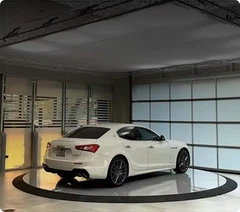
Rotary stages, generally speaking, can handle a variety of load sizes depending on their design. Smaller rotary stages, like those used in microscope setups, can hold relatively light loads, such as small glass slides or specimens. Larger industrial - grade rotary stages, on the other hand, are designed to handle much heavier loads. For example, DAXLIFTER Customized Car Vehicle Rotary Rotating Stage Platform is a large - scale rotary stage that can easily rotate a car. This kind of heavy - duty rotary stage is built with robust materials and a powerful motor to support the weight of the vehicle.
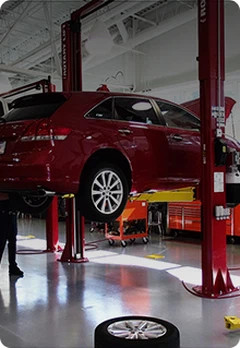
Linear stages also come in different load - handling capacities. Small, lightweight linear stages are commonly used in desktop CNC routers or small measurement devices. They can handle loads of just a few kilograms. Industrial - sized linear stages, however, are engineered to support much heavier loads, even tons in some cases. For example, the Floor To Floor Car Lift Platform uses a linear stage mechanism to move cars from one floor to another. These linear stages need to be able to hold the significant weight of a car and move it safely and smoothly.
Speed and Acceleration
The speed and acceleration capabilities of rotary and linear stages can vary widely.


Rotary stages can reach different rotational speeds. In some high - speed applications, like in a centrifuge, a rotary stage can rotate at extremely high speeds. However, the speed needs to be balanced with precision. If you rotate a stage too quickly, it might be difficult to accurately position the object at the desired angle. So, in applications where high precision is required, the rotational speed is often adjusted accordingly.
Linear stages also have different speed and acceleration settings. In a high - speed conveyor system, a linear stage moves items along at a rapid pace. But again, when you need high precision in linear movement, like in a surgical robot where the movements need to be very exact, the speed of the linear stage is typically slower.
Applications
The difference in their motion types leads to a wide range of applications for rotary and linear stages.
Rotary stages are used in many industries. In the aerospace industry, they're used to test the performance of aircraft components by rotating them to simulate different flight conditions. In the semiconductor industry, rotary stages are used to position wafers during the manufacturing process. And as I mentioned before, in the field of microscopy, they're used to rotate samples for better viewing.
Linear stages have equally diverse applications. In the manufacturing industry, they're used in CNC machines for cutting, drilling, and milling operations. In the packaging industry, linear stages are used to move products along the production line for filling, labeling, and sealing. In the medical field, linear stages are used in devices like CT scanners to move the patient table in a straight line to get accurate images.
So, Which One Do You Need?
Deciding between a rotary stage and a linear stage depends on your specific needs. If your application requires rotational movement, such as positioning an object at a certain angle or spinning it for testing, then a rotary stage is the way to go. But if you need to move an object in a straight line, whether it's for transporting, assembly, or measurement, a linear stage is the better choice.
If you're thinking about purchasing a rotary stage or are still unsure which type of stage is right for you, don't hesitate to get in touch. We're here to help you find the perfect stage for your application. Whether you're in a research lab, a manufacturing plant, or any other industry that needs precise motion control, we've got the expertise and the products to meet your requirements. Just reach out, and we can start discussing your specific needs and see how we can work together.
References
- "Motion Control Handbook" by John Billman
- "Precision Machine Design" by Wayne Goedert
- Industry whitepapers on rotary and linear stages from leading manufacturers.


