


As a seasoned provider of parking systems, I've witnessed firsthand the remarkable evolution of smart parking technologies. These advancements not only address the ever - growing challenges of urban parking but also enhance the overall user experience. In this blog, I'll delve into the key technologies that power modern smart parking systems.
Sensor Technologies
One of the fundamental components of a smart parking system is sensor technology. Sensors are used to detect the presence or absence of vehicles in parking spaces. There are several types of sensors commonly employed in smart parking.
Ultrasonic Sensors
Ultrasonic sensors work by emitting high - frequency sound waves and measuring the time it takes for the waves to bounce back after hitting an object. In a parking context, if a vehicle is present in a parking space, the sound waves will bounce off the vehicle, and the sensor can calculate the distance based on the time delay. These sensors are relatively inexpensive and easy to install, making them a popular choice for many parking facilities. They are also suitable for both indoor and outdoor applications.
Magnetic Sensors
Magnetic sensors detect changes in the Earth's magnetic field caused by the presence of a ferromagnetic object, such as a vehicle. When a car enters a parking space, it distorts the local magnetic field, and the sensor can detect this change. Magnetic sensors are highly accurate and can be installed directly on the ground, which makes them less visible and less prone to damage. They are often used in surface parking lots and can provide real - time data on parking space occupancy.
Camera - Based Sensors
Camera - based sensors use computer vision algorithms to analyze images or videos of parking spaces. These sensors can detect vehicles, determine their type, and even read license plates. They offer a high level of flexibility as they can cover multiple parking spaces with a single camera. Camera - based sensors are particularly useful in monitoring large parking areas, such as multi - level parking garages. For example, in a busy commercial parking garage, camera - based sensors can be used to track the movement of vehicles, identify available parking spaces, and assist with traffic flow management.
Communication Technologies
Once the sensors have collected data about parking space occupancy, this information needs to be transmitted to a central management system. Communication technologies play a crucial role in this process.
Wi - Fi
Wi - Fi is a widely used communication technology in smart parking systems. It allows sensors and other devices to connect to a local network and transmit data to a central server. Wi - Fi offers high - speed data transfer, which is essential for real - time monitoring of parking spaces. Many modern parking sensors are equipped with Wi - Fi capabilities, enabling them to communicate with the management system without the need for complex wiring. For instance, in a small - to - medium - sized parking lot, Wi - Fi - enabled sensors can be easily installed and configured to send data to a cloud - based management platform.
LoRaWAN
LoRaWAN (Long Range Wide Area Network) is a low - power, long - range wireless communication protocol. It is ideal for smart parking applications because it allows sensors to transmit data over long distances with minimal power consumption. LoRaWAN is suitable for large - scale parking systems, such as those in industrial areas or large - scale commercial complexes. Sensors using LoRaWAN can operate for years on a single battery, reducing the maintenance requirements of the parking system.
Cellular Networks
Cellular networks, such as 4G and 5G, can also be used for data transmission in smart parking systems. They offer reliable and widespread coverage, making them suitable for parking facilities in urban areas. Cellular - connected sensors can transmit data directly to a cloud - based management system, which allows for remote monitoring and control of the parking system. For example, a parking system provider can use cellular networks to manage multiple parking facilities located in different parts of a city from a single central location.
Software and Management Systems
The data collected by sensors and transmitted through communication technologies is processed and managed by software and management systems.
Parking Guidance Systems
Parking guidance systems use the data from sensors to provide real - time information to drivers about available parking spaces. These systems can be implemented through various means, such as LED signs, mobile applications, or in - vehicle navigation systems. For example, LED signs installed at the entrance of a parking garage can display the number of available spaces on each level. Mobile applications can show a map of the parking facility with real - time availability information, allowing drivers to plan their parking in advance.
Revenue Management Systems
Revenue management systems are used to handle parking fees and payments. These systems can integrate with various payment methods, such as credit cards, mobile wallets, and prepaid cards. They can also generate reports on parking revenue, occupancy rates, and other important metrics. For instance, a smart parking system can automatically calculate the parking fee based on the duration of stay and process the payment through a mobile app. This not only simplifies the payment process for drivers but also improves the efficiency of revenue collection for parking operators.

Cloud - Based Management Platforms
Cloud - based management platforms provide a centralized location for monitoring and controlling smart parking systems. These platforms can store large amounts of data, perform analytics, and generate reports. They also allow parking operators to remotely manage multiple parking facilities from a single interface. For example, a parking system provider can use a cloud - based platform to monitor the occupancy rates of all its parking facilities, adjust pricing strategies based on demand, and schedule maintenance tasks.
Automation Technologies
Automation technologies are increasingly being incorporated into smart parking systems to improve efficiency and user experience.
Automated Parking Systems
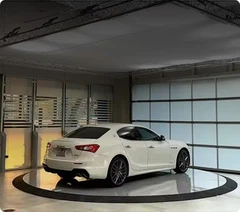
Automated parking systems, such as the DAXLIFTER Multi - level Customized Smart Automatic Multi - platform Car Parking System, use robotic mechanisms to park and retrieve vehicles. These systems eliminate the need for drivers to search for parking spaces and maneuver their vehicles in tight spaces. In an automated parking system, a driver simply drops off their vehicle at a designated entrance, and the system takes care of the rest. The robotic mechanism transports the vehicle to an available parking space and retrieves it when the driver returns. This not only saves time but also maximizes the use of available parking space.
Semi - Automated Parking Systems
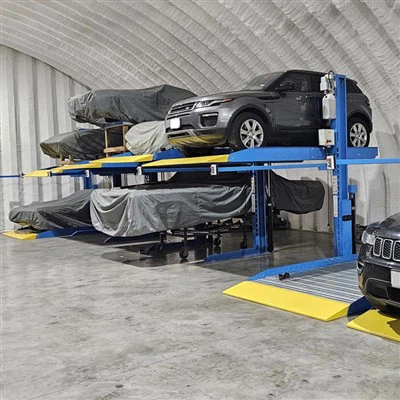
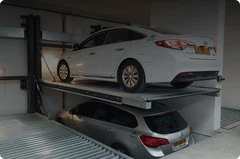
Semi - automated parking systems, like the DAXLIFTER 2 Level Customized Multi - platform Semi Automatic Car Parking System, offer a combination of manual and automated processes. In a semi - automated parking system, drivers may need to park their vehicles on a platform or in a designated area, and then an automated mechanism moves the vehicle to a more suitable parking space. These systems are often more cost - effective than fully automated systems and can still provide significant benefits in terms of parking space utilization and user convenience.