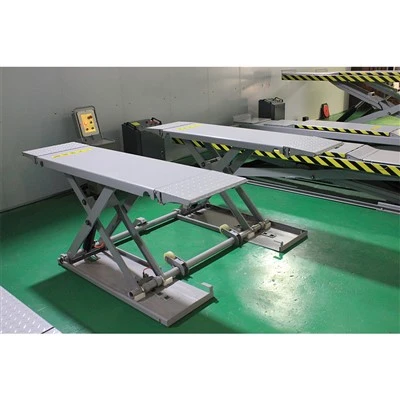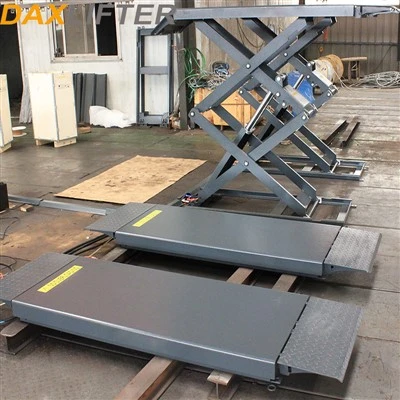




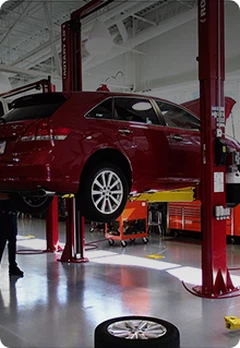


This is a frequent question among auto repair professionals and home mechanics. While a two post car service lift can be used for temporary parking with its mechanical locks engaged, extended storage is better suited to a 4 post car storage lift, which offers enhanced safety and convenience.
Two Post Car Service Lift vs. Four Post Car Parking Lifts: Storage Capabilities Compared
Two Post Car Lift: Designed for Service, Not Long-Term Storage
These lifts hoist a vehicle by its chassis, leaving the wheels hanging freely. This provides excellent underbody access but places the suspension in a fully extended position, which is not its natural state.
- Primary Functions: Ideal for repairs, tire services, and very short-term parking when locked.
- Drawbacks for Storage: The suspension components remain unloaded and stretched. Weight concentrates on just four chassis contact points, and the system demands more vigilant upkeep if used for prolonged storage.
- Essential Practice: Always lower the vehicle onto the mechanical locks; never leave it supported only by hydraulic pressure.
Four Post Car Parking Lifts: The Superior Choice for Extended Parking
A 4 post car storage lift cradles the vehicle on its tires, maintaining the suspension at its normal ride height. This design offers inherent stability for long-term use and enables two-level parking where ceiling height allows.
- Primary Functions: Perfect for extended vehicle storage, routine parking, and maintenance tasks that don't require wheel removal.
- Key Benefits: Suspension systems remain properly loaded; multiple automatic locking positions enhance security; the drive-on design simplifies operation.
- Useful Add-ons: Sliding jack trays or bridge jacks enable wheel-off work, while wheel casters allow the entire loaded lift to be repositioned.
Quick Selection Guide
- For Repairs & Tight Spaces: Choose a two post car service lift if your main tasks involve maintenance and you don't plan to stack vehicles.
- For Storage & Parking Efficiency: A 4 post car storage lift is the answer for long-term storage, creating a second parking space, or a simplified drive-on workflow.
- For Combined Needs: Opt for a 4 post car storage lift equipped with a sliding jack if you need both storage and the ability to perform tire or brake services.

Risks of Long-Term Two-Post Storage & Mitigation Strategies
While possible, storing a vehicle on a two post car service lift introduces unique risks. A safe strategy involves recognizing potential failure points and implementing strict control measures.
Critical Risk Areas:
- Hydraulic Failure: The hydraulic system must never be trusted as the primary support; the mechanical locks are the only safe option for storage.
- Suspension Strain: With the wheels drooping, suspension bushings can be held in a twisted state, and shock absorbers are fully extended.
- External Factors: The setup can be vulnerable to strong gusts, accidental impacts from other equipment, or vibrations.
- Operator Error: Mistakes during raising, locking, or lowering-such as uneven lock engagement-pose significant hazards.
Pre-Storage Safety Checklist
- Inspect the Lift: Verify that anchor bolts are tight, columns are plumb, and arm restraints are secured.
- Position Pads Correctly: Place lift pads precisely at the manufacturer's specified points, ensuring solid and level contact with the chassis.
- Engage Locks Properly: Raise the vehicle, listen for the locks to engage at the first level, then proceed to the desired height and lower it completely onto the locks.
- Secure the Area: Keep the workspace clear. Move tools and equipment away, close bay doors to minimize wind, and avoid placing fans that could blow directly on the vehicle.

Enhanced Stability Measures (if applicable):
Use supplementary pins or locking devices to further secure the lift arms.
Consider using support stands under the axles for added peace of mind, ensuring they don't lift the vehicle off the lift pads.
Attach a clear "Vehicle in Storage - Do Not Operate" warning tag on the power unit.
Ongoing Maintenance for Stored Vehicles
Regular checks are crucial to catch issues early.
- Weekly: Visually inspect for pad shifting, uneven lock seating, hydraulic leaks, or cable slack.
- Monthly: Lower the vehicle to the ground for a period to relieve suspension stress. This is also a good time to re-tighten anchors and lubricate moving parts as per the manual.

Why is 4 post car storage lifts suitable for Long-Term Storage
The fundamental advantage lies in how the vehicle is supported. By resting on its tires, the car's weight is distributed as intended, preventing unnecessary stress on suspension components. The multiple-post design and automatic locks create an extremely stable, platform-like structure. Operation is also simpler: just drive on, lift, and the locks engage securely. Even minor parking misalignments are less critical on the fixed runways of a 4 post car storage lift compared to the adjustable arms of a two-post model.
Accessories further increase functionality. Drip trays protect lower vehicles, sliding jacks enable repairs, and wheel casters allow for repositioning. The overall lower center of gravity and wide footprint make these lifts inherently resistant to shaking or tipping.

Environmental and General Maintenance Considerations
The storage environment impacts both the lift and the vehicle.
Control humidity and temperature to prevent corrosion.
Clean up spills promptly, as fluids can damage concrete and metal.
In winter climates, rinse off road salt and apply a protective coating to exposed metal surfaces.
Preventative Lift Maintenance Schedule:
- Daily/Weekly: Test lock operation, check for fluid leaks, and inspect cable/chain tension.
- Monthly: Lubricate all moving parts and check anchor bolt torque.
- Annually: Have a qualified technician perform a comprehensive inspection.
Vehicle Storage Preparation:
Inflate tires to the recommended pressure and monitor them with temperature changes.
Connect the battery to a smart maintainer/charger.
For storage beyond a few weeks, add a fuel stabilizer.
Check for and block any potential entry points for pests.

Administrative Best Practice
Maintain a simple log sheet on the lift. Record the storage date, lock positions used, and the operator's name. Note each weekly inspection. This creates a clear record and prevents miscommunication, ensuring everyone knows the vehicle's status before any work begins.
Any other doubts and questions just contact us.