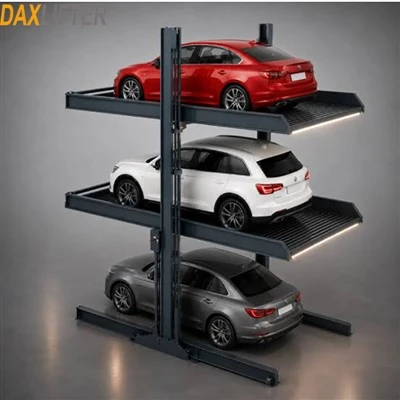



Car lifts are essential equipment for every repair workshop. Many new shop owners spend a long time comparing four-post and two-post lifts without knowing which one fits better. Neither model is universally superior. The right choice depends on your workshop layout, typical service jobs and budget. This practical comparison based on real repair workflows will help you make a clear decision.
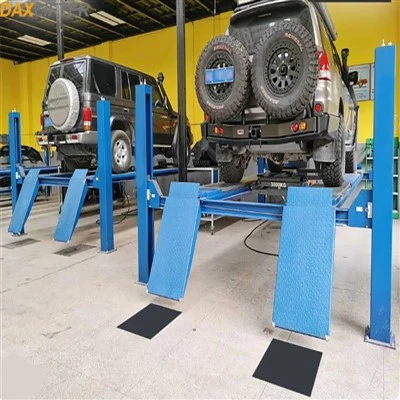
First, the four-post lift. Technicians who carry out major overhauls and chassis work know its key benefits. There is no base plate running across the centre, leaving an open, flat floor. No oil hoses or base cross-members block the undercarriage area. Creeper seats and tool carts can move freely, and oil spills are easy to clean with no hidden corners. Low-slung sports cars with low ground clearance can drive on and off without scraping the chassis. The overhead cross beam delivers robust frame rigidity, so the platform sways very little when raised. It offers superior stability for chassis rebuilds, collision frame straightening, and EV battery removal and installation, where precision matters.
Its main limitation is ceiling height. A minimum clear ceiling height of 3.8 m is recommended for normal installation. Many ground-floor retail premises and older shopfronts only have around 3 m of clearance. Even if squeezed in, the lifting height will be insufficient for larger vehicles, creating frustrating operational limits. Such sites are generally not suitable for four-post lifts.
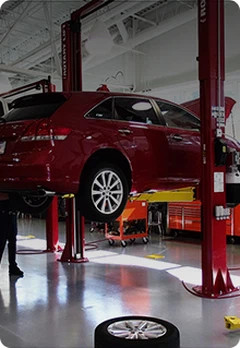
The two-post lift is the most widely used type and fits most roadside repair shops. It has no overhead beam, so it is much more ceiling-friendly. It can be installed with roughly 3 m clear height, with fewer site constraints and a lower upfront investment, making it ideal for new workshops working within a tight budget. Two common configurations are available: symmetric and asymmetric. Symmetric lifts have evenly spread arms, better suited for wide and long-wheelbase vehicles such as pickup trucks, light vans and box vehicles. Asymmetric lifts feature offset columns, leaving ample space for opening doors. For regular passenger cars and SUVs, technicians can open doors without hitting the posts, speeding up routine maintenance, brake replacement and suspension service.
It also has clear drawbacks. Traditional baseplate two-post lifts have a connecting base between the two columns, with hydraulic lines and cables routed along it. The base reduces working clearance underneath the vehicle, making some awkward repair positions uncomfortable. Grease and oil build up inside the base gaps, which are hard to clean and collect sludge over time.
Quick selection guide based on your workshop business: Choose a four-post lift if: your ceiling height is ≥ 3.8 m; you handle a high volume of collision repairs, chassis overhauls and EV service requiring high stability; you prefer a clean workshop floor and regularly move creepers and tool trolleys.
Choose a two-post lift if: your shop is a standard retail unit with insufficient ceiling height for a four-post lift; your work mainly consists of quick services like oil changes, tyre and brake checks; you are starting a new shop and want to control capital expenditure to cover basic repair needs.
Safety must never be compromised. Both lift types are heavy-duty machines used daily at high frequency. Rubber lift pads and arms must align exactly with the manufacturer-specified lifting points, never on weak chassis sections. Raise the vehicle about 10 cm first, pause and check the locks and vehicle stability before lifting to working height. Inspect hydraulic hoses for leaks, cables for wear and safety lock engagement regularly. Shut down the unit immediately if any fault is found. The concrete foundation must meet strength requirements, and anchor bolts must be secured properly. Even a high-quality lift will shift over time on an unstable base. Never overload the lift. Modern electric vehicles are heavy, so always select a rated capacity with sufficient safety margin instead of operating at the absolute limit.
Three core factors guide your selection: ceiling height, vehicle types you service and budget. Many shop owners buy purely based on price, only to find the lift is too tall or inconvenient once installed, leading to costly rework.
If you are unsure about your site dimensions, vehicle compatibility and load rating, DAXLIFTER can provide a free layout proposal. Contact: +86 15192782747 (WhatsApp available) Email: sales@daxlifter.com