






The Basics of Parking Hoists
Parking hoists are essential equipment in modern parking systems, designed to maximize the use of limited parking space. They come in different types, such as four - post lifts, scissor lifts, and stacker parking lifts. Each type has its own unique features and applications.
The DAXLIFTER 4 Four Post Indoor Outdoor Commercial Vehicle Parking Lift is a popular choice for commercial parking lots. It can handle heavy - duty vehicles and is suitable for both indoor and outdoor use. The four - post design provides stability and allows for easy access to the vehicle.
The DAXLIFTER 2.3T Car Garage Scissor Parking Lift is often used in home garages or small - scale parking facilities. Its scissor - like structure enables it to lift vehicles with relatively less space requirement.
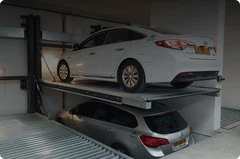
The DAXLIFTER 2.3t - 3.2t 2.1m Home 2 Double Car Vehicle Storage Stacker Parking Lift is ideal for residential areas where space is limited. It can stack two cars vertically, effectively doubling the parking capacity.
Energy - Efficiency Factors of Parking Hoists
Motor and Power Consumption
The motor is the heart of a parking hoist. Modern parking hoists are equipped with high - efficiency motors that are designed to consume less power while providing sufficient lifting force. For example, some advanced motors use variable frequency drives (VFDs). VFDs can adjust the motor's speed according to the load, reducing energy consumption during idle or low - load periods. When the hoist is not in use, the motor can operate at a lower speed or even shut down completely, saving energy.
Hydraulic System
Many parking hoists use hydraulic systems for lifting. A well - designed hydraulic system can significantly improve energy efficiency. The hydraulic pumps in these systems are engineered to minimize internal leakage, which reduces the amount of energy wasted. Additionally, some hydraulic systems are equipped with energy - recovery mechanisms. When the hoist descends, the potential energy of the vehicle is converted into hydraulic energy and stored, which can be reused for the next lifting operation.
Control Systems
Intelligent control systems play a crucial role in energy efficiency. These systems can monitor the operation of the parking hoist in real - time and adjust the power supply accordingly. For instance, they can detect the weight of the vehicle being lifted and optimize the lifting process to use the least amount of energy. Moreover, some control systems can be programmed to operate during off - peak hours when electricity rates are lower, further reducing energy costs.
Comparing Energy - Efficiency with Traditional Parking Methods
Space Utilization and Energy Indirectly
Traditional parking methods, such as surface parking lots, require a large amount of land. The construction and maintenance of these lots also consume energy, including the energy used for lighting, landscaping, and security. In contrast, parking hoists can stack vehicles vertically, reducing the land area required for parking. This not only saves land resources but also indirectly reduces the energy consumption associated with large - scale surface parking lots.
Energy Consumption per Vehicle
When it comes to the energy consumption per vehicle, parking hoists can be more energy - efficient. In a traditional parking lot, vehicles need to drive around to find a parking space, which consumes fuel. With parking hoists, vehicles can be quickly and efficiently parked in a smaller area, reducing the overall energy consumption related to the parking process.
Real - World Examples of Energy - Efficient Parking Hoists
In some large commercial buildings, parking hoists have been installed to replace traditional parking lots. These hoists are equipped with the latest energy - saving technologies, such as high - efficiency motors and intelligent control systems. As a result, the energy consumption of the parking facilities has been significantly reduced. For example, a shopping mall in a major city installed a set of stacker parking hoists. After the installation, the energy bill for the parking area decreased by 30% compared to the previous surface parking lot.
Challenges in Achieving Energy Efficiency
Initial Investment
One of the main challenges in promoting energy - efficient parking hoists is the initial investment. High - tech energy - saving components, such as VFDs and energy - recovery systems, can increase the cost of the parking hoist. However, it's important to note that the long - term energy savings can offset the initial investment.
Maintenance and Upgrades
To maintain the energy efficiency of parking hoists, regular maintenance is required. This includes checking the motor, hydraulic system, and control system for any malfunctions. Additionally, as technology advances, upgrading the parking hoist to incorporate the latest energy - saving features may be necessary.


