







When it comes to the automotive service industry, the question of whether a car service lift can be used for heavy - duty vehicles is a crucial one. As a well - established car service lift supplier, I've encountered this query numerous times from clients, and it's essential to provide a comprehensive answer.
Understanding the Basics of Car Service Lifts
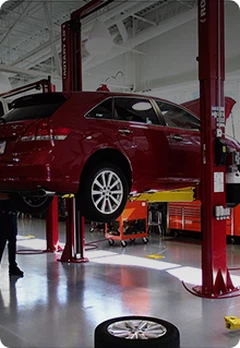
Car service lifts are indispensable tools in automotive repair shops, car dealerships, and even home garages. They are designed to raise vehicles off the ground, providing easy access to the undercarriage for maintenance, repairs, and inspections. There are several types of car service lifts, including two - post lifts, four - post lifts, scissor lifts, and portable car jacks. Each type has its own unique features, load - bearing capacities, and applications.
Two - post lifts are popular for their ability to provide excellent access to the vehicle's undercarriage. They typically have a load capacity ranging from 7,000 to 18,000 pounds, depending on the model. Four - post lifts, on the other hand, are more stable and are often used for long - term storage or tire rotation. Their load - bearing capacity can go up to 30,000 pounds or more. Scissor lifts offer a compact design and are suitable for a variety of applications, with load capacities varying based on the specific model. Portable car jacks, such as Pneumatic Scissor Car Jack, are handy for quick repairs and have relatively lower load capacities.
Defining Heavy - Duty Vehicles
Heavy - duty vehicles are generally larger and heavier than standard passenger cars. This category includes trucks, buses, and some commercial vehicles. These vehicles are built to carry heavy loads and are often used in industries such as transportation, construction, and logistics. The weight of heavy - duty vehicles can vary significantly, with some trucks weighing over 33,000 pounds.
Can a Car Service Lift Be Used for Heavy - Duty Vehicles?
The answer to this question is not straightforward. It depends on several factors, including the type and capacity of the car service lift, the weight of the heavy - duty vehicle, and the specific application.
Load Capacity
The most critical factor is the load capacity of the car service lift. If the lift's load capacity is lower than the weight of the heavy - duty vehicle, using the lift can be extremely dangerous. It can lead to structural failure of the lift, causing the vehicle to fall and potentially resulting in serious injuries or property damage. For example, a standard car service lift with a load capacity of 5,000 pounds is clearly not suitable for a heavy - duty truck that weighs 20,000 pounds.
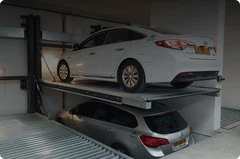
However, some high - capacity car service lifts are designed to handle heavier loads. For instance, our DAXLIFTER 3.5T Pit Scissor Type Car Stacker Lift has a load capacity of 3.5 tons (7,716 pounds), which can be used for some smaller heavy - duty vehicles, such as light - duty trucks or vans. Similarly, the DAXLIFTER 3.5T Scissor Car Hoist also offers a decent load - bearing capacity for certain heavy - duty applications.
Structural Integrity
In addition to load capacity, the structural integrity of the lift is also important. Heavy - duty vehicles often have a different distribution of weight compared to standard cars. The lift must be able to withstand the unique stress and pressure exerted by the heavy - duty vehicle's weight distribution. For example, a lift that is designed to evenly distribute the weight of a passenger car may not be able to handle the concentrated weight of a heavy - duty truck's axles.
Safety Features
Safety is of utmost importance when using a car service lift for heavy - duty vehicles. The lift should be equipped with reliable safety features, such as locking mechanisms, overload protection, and emergency stop buttons. These features help prevent accidents and ensure the safety of the operators and the vehicle.
Applications of Car Service Lifts for Heavy - Duty Vehicles
If the car service lift has the appropriate load capacity and safety features, it can be used for a variety of heavy - duty vehicle applications.
Maintenance and Repairs
One of the primary applications is for maintenance and repairs. Mechanics can use the lift to access the undercarriage of the heavy - duty vehicle, making it easier to perform tasks such as oil changes, brake repairs, and suspension work. For example, a scissor lift can be used to lift a light - duty truck to a comfortable working height, allowing the mechanic to inspect and repair the vehicle's components.
Inspections
Car service lifts are also useful for inspections. By raising the heavy - duty vehicle off the ground, inspectors can thoroughly examine the undercarriage for any signs of damage, wear, or corrosion. This helps ensure the safety and reliability of the vehicle.
Considerations When Using a Car Service Lift for Heavy - Duty Vehicles
When using a car service lift for heavy - duty vehicles, there are several considerations to keep in mind.
Training and Certification
Operators should receive proper training and certification before using the lift. They need to understand the lift's operating procedures, safety features, and limitations. This helps prevent accidents and ensures the proper use of the lift.
Regular Maintenance
The lift should be regularly maintained to ensure its safe and reliable operation. This includes checking the hydraulic system, lubricating moving parts, and inspecting the structural integrity of the lift. Regular maintenance helps extend the lifespan of the lift and reduces the risk of breakdowns.
Compatibility with the Vehicle
The lift must be compatible with the heavy - duty vehicle. This includes ensuring that the lift's lift points are properly aligned with the vehicle's designated lift points. Using the wrong lift points can cause damage to the vehicle and pose a safety risk.


