






It's a crucial question, especially for those in the automotive industry, car dealerships, or anyone who needs to move vehicles around efficiently. So, let's dive into what the load capacity of a small car mover really means and how it can impact your operations.
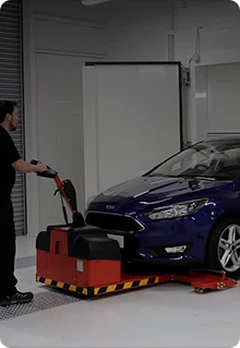
First off, what exactly is a small car mover? Well, it's a compact and maneuverable vehicle designed to move cars within a limited space, like a parking lot or a garage. These movers are a game-changer for businesses that deal with a high volume of vehicles, as they can save time and effort compared to traditional methods of moving cars.
Now, let's talk about load capacity. The load capacity of a small car mover refers to the maximum weight it can safely carry. This includes the weight of the car being moved, as well as any additional equipment or accessories that might be attached to the mover. It's important to note that exceeding the load capacity can not only damage the car mover but also pose a safety risk.
The load capacity of small car movers can vary widely depending on the model and design. Some smaller, more basic models might have a load capacity of around 1 - 1.5 tons. These are typically suitable for moving smaller cars, like compact sedans or hatchbacks. On the other hand, there are more heavy-duty small car movers that can handle loads of up to 2.5 tons or even more. These are great for moving larger vehicles, such as SUVs and light trucks.
For example, the DAXLIFTER 2.5t Battery Electric Vehicle Car Mover is a fantastic option if you need to move heavier vehicles. With a load capacity of 2.5 tons, it can easily handle most mid - sized to large cars and SUVs. This mover is powered by a battery, which means it's environmentally friendly and quiet, making it ideal for indoor use.
When choosing a small car mover based on load capacity, you need to consider the types of vehicles you'll be moving. If you mainly deal with small cars, a lower load capacity mover might be sufficient. But if you have a mix of vehicle sizes, or if you plan to move larger vehicles in the future, it's a good idea to invest in a mover with a higher load capacity.
Another factor to consider is the terrain where the car mover will be used. If the surface is uneven or has a lot of inclines, a mover with a higher load capacity might be better able to handle the additional stress. Also, keep in mind that the load capacity might be affected by the speed at which the mover is operating. Moving a heavy load at high speeds can put more strain on the mover's components.
It's also important to understand that the load capacity is not just about the weight of the car. You need to consider the distribution of the weight as well. A well - balanced load is essential for the safe and efficient operation of the car mover. If the weight is unevenly distributed, it can cause the mover to become unstable, increasing the risk of accidents.

In addition to the physical load capacity, you should also think about the practicality of using a car mover with a certain load capacity. For instance, a mover with a very high load capacity might be larger and less maneuverable, which could be a problem in tight spaces. So, you need to find the right balance between load capacity and maneuverability based on your specific needs.
Now, let's talk about how to determine the load capacity of a car mover. Most manufacturers will provide detailed specifications about the load capacity of their products. You can also look for reviews and testimonials from other users to get an idea of how well a particular car mover performs under different load conditions.
If you're still not sure which car mover is right for you, don't hesitate to reach out to us. As a car mover supplier, we have a team of experts who can help you choose the best option based on your requirements. Whether you need a small car mover for a small dealership or a large - scale operation, we can provide you with the right solution.


