




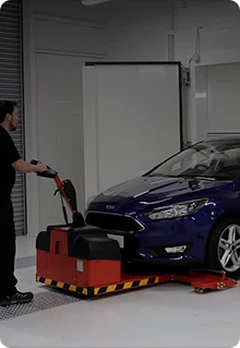

As a well - established car mover supplier, I've had the privilege of witnessing the evolution of car moving technology and getting to know the diverse range of car movers available in the market. In this blog, I'll share insights into the different types of car movers, their features, and applications.
1. Manual Car Movers
Manual car movers are the most basic type of car moving equipment. They are typically designed for light - duty applications and are operated by hand. These car movers are simple to use and relatively inexpensive, making them a popular choice for small - scale operations or home use.
One common type of manual car mover is the car dolly. A car dolly is a small, wheeled platform that you can place under the front or rear wheels of a vehicle. It allows you to move the car short distances, such as into a garage or onto a trailer. Car dollies are often made of steel or aluminum and can support a certain weight capacity, usually ranging from a few hundred to a couple of thousand pounds.
Another manual option is the car jack with a moving mechanism. Some car jacks are designed not only to lift the vehicle but also to move it horizontally. This can be useful when you need to reposition a car in a tight space. However, manual car movers have their limitations. They require physical effort to operate, and their load - bearing capacity is relatively low compared to other types.
2. Hydraulic Car Movers
Hydraulic car movers use hydraulic power to lift and move vehicles. They are more powerful than manual car movers and can handle heavier loads. Hydraulic systems work by using a fluid (usually oil) to transmit force. When pressure is applied to the fluid in a confined space, it can generate a significant amount of force, which is used to lift and move the vehicle.
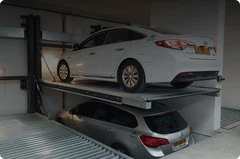
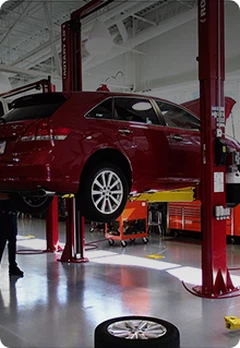
Hydraulic car lifts are a well - known example of hydraulic car movers. They come in various types, such as two - post lifts, four - post lifts, and scissor lifts. Two - post lifts are designed to lift the vehicle by its frame or suspension points, providing easy access to the underside of the car for maintenance and repairs. Four - post lifts, on the other hand, are more stable and are often used for long - term vehicle storage or for performing more extensive maintenance work. Scissor lifts are compact and can be used in smaller spaces.
Hydraulic car movers are commonly used in automotive repair shops, car dealerships, and large - scale vehicle storage facilities. They offer precise control over the lifting and moving process, but they are also more expensive to purchase and maintain compared to manual car movers.
3. Electric Car Movers
Electric car movers are becoming increasingly popular due to their efficiency, ease of use, and environmental friendliness. They are powered by electricity, either from a battery or a direct power source.
Battery - powered electric car movers, like the DAXLIFTER 2.5t Battery Electric Vehicle Car Mover, offer great flexibility. They can be used in areas without a direct power supply, such as outdoor parking lots or large warehouses. These car movers are equipped with electric motors that provide smooth and quiet operation. They are capable of moving vehicles of different sizes and weights, with some models having a high load - bearing capacity.
Electric car movers are also known for their precision. The electric controls allow for accurate positioning of the vehicle, which is crucial in applications where space is limited or where the vehicle needs to be placed in a specific location. Additionally, they require less maintenance compared to hydraulic car movers as there are no hydraulic fluids to change or leak - prone components.
4. Pneumatic Car Movers
Pneumatic car movers use compressed air to generate the force needed to move vehicles. They are often lighter and more portable than hydraulic car movers, making them suitable for use in various environments.
Pneumatic car jacks and hoists are common examples of pneumatic car movers. They can be quickly set up and used to lift and reposition vehicles. Pneumatic systems are relatively simple in design and are less likely to experience mechanical failures compared to some other types of car movers.


However, pneumatic car movers do require a source of compressed air, which can limit their use in certain situations. They also generally have a lower load - bearing capacity compared to hydraulic car movers, but they are still capable of handling many everyday car - moving tasks.
5. Remote - Controlled Car Movers
In recent years, remote - controlled car movers have emerged as a convenient and high - tech solution for moving vehicles. These car movers can be controlled from a distance using a remote control device.
Remote - controlled car movers are especially useful in large facilities where manual control may be difficult or time - consuming. For example, in a large car dealership with a large inventory of vehicles, a remote - controlled car mover can quickly and easily move cars around the lot without the need for an operator to be physically present near the vehicle.
They often combine the features of other types of car movers, such as electric or hydraulic power, with the added convenience of remote - control operation. This allows for precise and efficient vehicle movement, increasing productivity and reducing the risk of accidents in the workplace.
Applications of Different Car Movers
The choice of car mover depends on the specific application. In an automotive repair shop, hydraulic car lifts are essential for performing under - car maintenance, while electric car movers can be used to move cars around the shop floor. For home use, a manual car dolly or a simple electric car mover may be sufficient for moving a vehicle in a garage.
In car dealerships, remote - controlled car movers can streamline the process of moving cars in and out of storage, onto display areas, and for test drives. Pneumatic car movers are useful in situations where quick and portable lifting is required, such as in mobile repair services.
Conclusion
As a car mover supplier, I understand that each type of car mover has its own advantages and limitations. Whether you need a simple manual car dolly for home use or a high - tech remote - controlled car mover for a large - scale operation, there is a solution available to meet your needs.
If you are in the market for a car mover, I invite you to contact us to discuss your requirements. We have a wide range of car movers to choose from, and our team of experts can help you select the most suitable one for your specific application. Whether you need a small - scale manual car mover or a heavy - duty hydraulic or electric lift, we can provide you with high - quality products and professional service.
References
- Automotive Service Equipment Manufacturers Association (ASEMA) Publications
- Industry - specific trade journals on automotive technology and equipment


