








In the world of mechanical engineering and industrial applications, rotating stages play a crucial role in various fields, from manufacturing to entertainment. As a leading supplier of rotating stages, I often get asked about the deceleration of a rotating stage. In this blog post, I'll delve into what deceleration means in the context of a rotating stage, its importance, and how it impacts the performance of these equipment.
Understanding Deceleration in Rotating Stages
Deceleration in a rotating stage refers to the rate at which the stage slows down its rotational speed. It is the opposite of acceleration, which is the rate at which the stage speeds up. When a rotating stage is in operation, it may need to slow down for various reasons, such as reaching a specific position, avoiding over - rotation, or ensuring safe operation.
Mathematically, deceleration is expressed as a negative acceleration. If we consider the angular velocity ((\omega)) of the rotating stage, the deceleration ((\alpha)) can be calculated using the formula (\alpha=\frac{\Delta\omega}{\Delta t}), where (\Delta\omega) is the change in angular velocity and (\Delta t) is the time interval over which the change occurs. For example, if a rotating stage is initially rotating at an angular velocity of (\omega_1 = 10) radians per second and it slows down to (\omega_2 = 5) radians per second in (t = 2) seconds, the deceleration (\alpha=\frac{\omega_2-\omega_1}{t}=\frac{5 - 10}{2}=- 2.5) radians per second squared.
Importance of Deceleration in Rotating Stages
- Precision Positioning: One of the primary reasons for deceleration is to achieve precise positioning. In many applications, such as in the manufacturing of electronic components or in the operation of telescopes, the rotating stage needs to stop at a specific angle with high accuracy. By controlling the deceleration, we can ensure that the stage comes to a halt exactly at the desired position.
- Safety: Deceleration is also crucial for safety. If a rotating stage were to suddenly stop without proper deceleration, it could cause mechanical stress on the components, leading to premature wear and tear or even failure. Additionally, in applications where human operators are involved, sudden stops can pose a safety risk. By gradually decelerating the stage, we can minimize these risks.
- Smooth Operation: A well - controlled deceleration ensures smooth operation of the rotating stage. It reduces vibrations and jerks, which can be detrimental to the performance of the equipment and the quality of the work being done. For example, in a 3D printing application where a rotating stage is used to position the printing head, a smooth deceleration helps in creating high - quality prints.
Factors Affecting Deceleration
- Inertia: The inertia of the rotating stage and the load it carries is a significant factor in determining the deceleration. Inertia is the property of an object to resist changes in its state of motion. A rotating stage with a large moment of inertia will require more force to decelerate compared to a stage with a smaller moment of inertia. For example, a large - scale rotating platform used in an amusement park ride will have a much higher inertia than a small laboratory - grade rotating stage.
- Friction: Friction between the moving parts of the rotating stage also affects deceleration. Friction can act as a natural brake, helping to slow down the stage. However, excessive friction can lead to increased wear and tear and may also affect the accuracy of the deceleration. Therefore, it is important to maintain an appropriate level of friction in the rotating stage.
- Control System: The control system of the rotating stage plays a crucial role in determining the deceleration. A well - designed control system can precisely regulate the deceleration rate, ensuring that the stage stops at the desired position. Modern control systems often use feedback mechanisms, such as encoders, to monitor the angular position and velocity of the stage and adjust the deceleration accordingly.
Applications of Rotating Stages and Deceleration
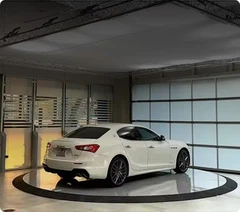
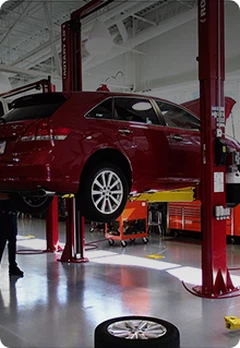
- Automotive Industry: In the automotive industry, rotating stages are used in various applications, such as in car manufacturing plants for painting and assembly processes. The deceleration of these rotating stages is crucial for ensuring that the cars are painted evenly and assembled accurately. For example, a Floor To Floor Car Lift Platform may use a rotating stage to position the car at different angles for painting or inspection. The deceleration of the rotating stage allows for precise positioning of the car, ensuring high - quality results.
- Entertainment Industry: Rotating stages are widely used in the entertainment industry, such as in theaters and concert halls. The deceleration of these stages is important for creating smooth and seamless transitions during performances. For example, a large - scale rotating stage in a theater may need to stop at a specific position to reveal a new set or to allow performers to enter or exit the stage. By controlling the deceleration, we can ensure that these transitions are smooth and visually appealing.
- Robotics and Automation: In robotics and automation, rotating stages are used to position robotic arms and other components. The deceleration of these stages is essential for accurate and efficient operation. For example, in a pick - and - place robot, the rotating stage needs to stop precisely at the correct position to pick up and place objects. A well - controlled deceleration ensures that the robot can perform its tasks with high accuracy.
Our Offerings: DAXLIFTER Customized Car Vehicle Rotary Rotating Stage Platform
As a supplier of rotating stages, we offer a wide range of products, including the DAXLIFTER Customized Car Vehicle Rotary Rotating Stage Platform. Our rotating stages are designed with high - precision components and advanced control systems to ensure accurate deceleration and smooth operation.
Our DAXLIFTER rotating stage platform is customizable to meet the specific needs of our customers. Whether you need a small - scale stage for a laboratory application or a large - scale platform for an industrial setting, we can provide a solution that fits your requirements. Our team of engineers and technicians has extensive experience in designing and manufacturing rotating stages, and we are committed to providing high - quality products and excellent customer service.


Contact Us for Procurement
If you are interested in purchasing a rotating stage for your application, we invite you to contact us for a detailed discussion. Our sales team will be happy to provide you with more information about our products, including specifications, pricing, and delivery options. We believe that our rotating stages can provide a reliable and cost - effective solution for your needs, and we look forward to working with you.
References
- Halliday, D., Resnick, R., & Walker, J. (2014). Fundamentals of Physics. Wiley.
- Meirovitch, L. (2001). Dynamics and Control of Structures. Wiley.


