



Reversing out of a garage driveway seems simple, yet narrow lanes bring considerable safety risks. Car turntables offer an alternative solution: vehicles drive onto the platform and rotate in‑situ before driving straight forward out. This article compares the two traffic‑flow solutions, helping you select the proper layout according to site conditions, safety requirements and daily usage habits.
Core Differences: Car Turntable vs Traditional Driveway
Traditional driveways fully rely on drivers to steer vehicles, requiring repeated reversing and steering adjustments. This works well on open, flat sites. However, short lanes, slopes, curved paths or proximity to main roads will make vehicle access quite challenging.
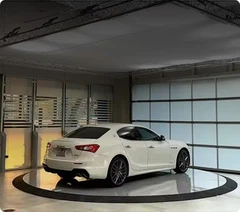
Car turntables change traffic logic. Instead of tricky in‑lane U‑turns, vehicles park on the platform and rotate 360 degrees to face the exit before driving away. Turntables deliver outstanding advantages on space‑constrained sites with limited sightlines.
There is no universally "better" solution. The key is solving real‑site pain points. Conventional driveways are sufficient for spacious plots. Car turntables prove more reliable and durable for projects prioritizing safety and easy access with limited land area.
Solution Comparison Table
表格
| Comparison Item | Traditional Driveway | Car Turntable |
|---|---|---|
| Steering Method | Manual driving with multiple reversing adjustments | Mechanical 360° platform rotation |
| Space Requirement | Full dedicated U‑turn zone needed | Compact circular platform footprint |
| Exit Mode | Mostly reverse‑exit onto roadway | Forward‑drive exit supported |
| Application Scenarios | Open sites with low traffic and low risk | Narrow lanes, sloped ground, complex‑access premises |
| Design Orientation | Basic vehicle passage | Combines practical function & property value upgrade |
Safety Considerations for Vehicle Access
Safety tops most clients' evaluation priorities. On traditional driveways, drivers often reverse towards roads, gates, walls or parked cars. Poor visibility increases accident risks.
Car turntables effectively mitigate these hazards. Vehicles re‑orient on‑platform before exit, so drivers drive forward with improved sight and control. They are well‑suited for private villas, residential compounds, commercial gateways and compact parking lots adjacent to main traffic roads.
Minor scratches and collisions can be reduced. Sharp cornering in tight spaces easily damages walls, gates and pillars. Rotation on a turntable keeps vehicle movement under control. Note that turntables cannot replace safe driving standards, yet they eliminate difficult reversing and multi‑step steering maneuvers.
Practical tip: Evaluate real sightlines from the driver's position on‑site, do not rely purely on drawing‑based lane‑width planning.
Space Utilization for Short & Narrow Driveways
Traditional driveways impose strict requirements on vehicle turning radius. Limited space forces frequent forward‑and‑back adjustments, wasting time and raising error risks.
Car turntables adopt a different layout logic. Vehicles complete turning within a fixed circular zone, ideal for urban narrow lanes, sloped residences, underground garages and small‑scale housing projects. Turntables serve as an excellent alternative when extensive driveway widening is undesirable.
This matters greatly in early‑stage planning. Widening roads for U‑turns consumes valuable land such as courtyards and front yards. Rotating platforms simplify layout and reduce paved area while keeping smooth vehicle circulation.
On many new‑build projects, land cost represents major expenditure. Simply widening driveways affects drainage, landscape design, pedestrian paths and overall aesthetics. Where land is limited, car turntables often achieve higher land‑use efficiency.
When Traditional Driveways Still Make Sense
Traditional driveways are not outdated. They work very well for simple residential projects. Wide, flat driveways with clear sightlines require no special turning equipment for daily access.
If vehicle frequency is low and entrance‑exit traffic conditions are simple, basic driveways satisfy requirements with lower construction cost and good cost‑effectiveness.
Construction procedures are simpler, mainly including paving, hardening and drainage works. Car turntables require foundation preparation, power cabling, dimension confirmation and access‑control systems. Simplified schemes are reasonable when site space is sufficient.
Avoid over‑investment in planning. Car turntables are meant to solve genuine access difficulties. If reversing in and out is easy with low risk, standard driveways meet property‑usage demands.
Note: Even with lower upfront cost, if daily reversing remains difficult, initial savings may not deliver optimal long‑term total cost.
Scenarios Where Car Turntables Bring Greatest Benefits
Turntables deliver maximum value where conventional U‑turns are troublesome: short driveways, narrow gateways, small entrances, underground garages and sloped access roads, where reversing creates poor daily experience.
Turntables also work well for sites hosting large‑size vehicles. SUVs and extended sedans demand larger turning envelopes. Where existing lanes cannot support U‑turns, turntables greatly simplify vehicle movement. Always specify platform load capacity to cover the heaviest vehicles on site.
For commercial projects, turntables organize traffic flow. Parking lots, auto showrooms, service entrances and shared residential garages improve vehicle circulation without building large U‑turn zones.
For high‑end residences, turntables enhance user experience. Drive in, rotate on‑platform, drive forward out - smooth circulation matches modern‑design concepts combining practicality and aesthetics.
Construction Options: Widen Driveway VS Install Car Turntable
Improving access by widening existing driveways sounds straightforward, yet it consumes extra land, increases paving material, modifies drainage and gate layout, and may harm existing landscape and building facades.
Installing a car turntable calls for complete project planning. Engineers need to confirm platform diameter, vehicle clearance, load rating, foundation bearing capacity, drainage layout, electrical control system and surface finishing. Stable and safe vehicle bearing relies on accurate parameters.
Two mainstream installation types are available:
Flush‑mounted turntable: Level with surrounding ground after installation for neat appearance, widely used for driveways, garages and main building entrances.
Surface‑mounted turntable: More suitable for finished existing sites with height‑difference conditions, lower reconstruction difficulty.
Drainage is critical for outdoor installations. Catch basins and peripheral drainage trenches keep rainwater away from turntable transmission, bearings and electrical components. Central or annular drainage channels can be adopted; auto‑drain pumps are required where gravity drainage is not feasible. Turntable foundations must remain perfectly level and follow manufacturer drawings strictly.
For outdoor exposure, corrosion protection is essential. Hot‑dip galvanized steel together with outdoor‑grade electrical protection resists rust and guarantees long‑term stable performance. Drainage layout, surface coating and electrical IP rating shall match local climate and site conditions.
Selection tip: Before confirming platform dimensions, calculate gate swing range, side‑mirror clearance, wall safety gaps and doorway width.
Key Technical Parameters to Evaluate for Turntable Procurement
Appearance alone is insufficient for turntable selection. Evaluate according to project requirements:
Load capacity: Rated load must cover the heaviest vehicles on site, including private cars and occasional heavy‑duty vehicles.
Platform diameter: Ensure zero collision risk with walls, gates, pillars and plants during full rotation; minor dimension errors affect long‑term operation.
Drive mechanism: Pin‑gear drive delivers smooth rotation, low failure rate and good durability for high‑frequency‑usage projects.
Control modes: Remote control, wall‑mounted controllers and auto‑positioning are optional. Safety features such as anti‑slip surface, soft start‑stop and obstacle sensing can be selected on demand.
Surface finishing options: Checkered plate, decorative flooring, stone tiling and anti‑slip overlay integrate the turntable aesthetically with driveways and garage floors.
Integrated Design & Overall Visual Effect
Well‑spaced traditional driveways feature clean visuals. Forced widening for U‑turns creates bulky, disorganized large hard‑scaped front areas.
Car turntables adopt compact layouts. Surfaces can be finished with concrete, stone or tiles to harmonize with surrounding building styles.
For premium residences, gateways are more than traffic passages, they shape arrival experience. Turntables create neat modern entrance atmospheres. Auto showrooms and commercial real‑estate also benefit from optimized vehicle display effects.
When selecting panel materials and surface treatments, prioritize outdoor durability. Weather‑resistant coatings and anti‑slip surfaces resist rain, high temperature and dust for long‑term reliable operation.
Summary
Traditional driveways offer better cost‑effectiveness for open sites. Car turntables represent a more robust long‑term solution for narrow, sloped or high‑land‑value projects. DAXLIFTER supplies 360° smooth‑rotating car turntables with custom dimensions, proven outdoor‑suitable units and professional engineering support. These systems improve traffic safety, save land space and resolve vehicle‑access challenges.
If you intend to purchase car turntables or inquire about pricing, please contact us: Email: sales@daxlifter.com WhatsApp: +86 15192782747 Our team will support you to select the most suitable model.