




Can an Existing Garage Be Retrofitted with a Car Turntable?
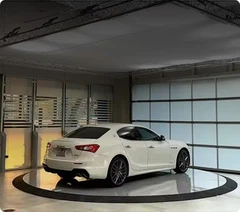
Many finished garages can be retrofitted with a car turntable. However, it is not merely about whether there is enough room to place the unit. It is critical to verify whether the platform can rotate safely, bear vehicle weight steadily and stand up to long‑term daily use. A car turntable enables vehicles to rotate 360° in‑situ, solving a common pain point: cars can be parked inside the garage yet there is insufficient space for U‑turn maneuvers.
For a successful retrofit, the garage floor must accommodate the turntable diameter with adequate clearance around the vehicle. Space is required not only for tire placement, but also for bumpers, side‑mirror swing paths and garage‑door zones. An undersized platform may allow rotation yet create collision risks and poor operational confidence. Both private garages and commercial parking spaces can integrate car turntables into layout planning.
Key Checks Before Garage Turntable Installation
1. Garage Dimensions & Rotational Clearance
Carry out on‑site survey for available space. A car turntable needs a full circular rotation zone free of obstacles such as columns, storage cabinets, wall corners, workbenches and door handles. Many garages are fine for parking yet unsuitable for turntables because cabinets and walls intrude into rotation paths.
Practical survey method: mark the proposed circular footprint on the floor and simulate vehicle sweeping paths. Large‑size SUVs and extended sedans with long front‑and‑rear overhangs require larger turning radii. Generous safety clearance delivers far better long‑term reliability compared to marginally sufficient space.
2. Slab Load‑Bearing Capacity & Concrete Floor Condition
The load limit of a retrofitted turntable depends heavily on the underlying foundation. Concrete slabs must support platform dead‑weight, vehicle loads and cyclic forces from repeated rotation. Old garage floors often suffer from cracks, uneven surfaces or weak concrete around drain openings. Such issues do not rule out installation, yet floor defects need targeted repair before construction.
Two installation approaches are available: flush‑mounted requires shallow cutting and mini‑pit excavation; surface‑mounted sits directly on existing flooring, which still demands flat and solid base. Both retrofitted and new‑build garages can adopt turntable solutions when site conditions qualify.
3. Vehicle Weight & Platform Load Rating
Load‑bearing capacity represents a fundamental safety threshold. The platform rated load must cover the heaviest vehicle on site. Turntables sized for compact sedans may not handle heavy‑duty SUVs and modern heavy electric vehicles.
Many property owners switch to heavy EVs and large SUVs whose weight far exceeds traditional fuel sedans. Sufficient safety margin should be reserved for future vehicle replacement.
Selection reminder: do not rely solely on curb weight. If vehicles frequently carry passengers, luggage and equipment, specify higher load rating for extra safety redundancy.
4. Power Supply, Control System & Safety Design
Most garage turntables are electrically driven. Confirm power source locations, control‑box placement, emergency‑stop devices and cable routing in advance. In compact private garages close to walls, vehicles and pedestrian zones, control‑system safety logic is highly important.
Dead‑man jog‑control (press‑to‑run remote): rotation happens only while holding the remote button; release and the platform stops instantly. This function lets drivers monitor rotation status and greatly reduce collision risks against walls, gates and surrounding objects.
Remote operation and auto‑positioning are optional and convenient for regular‑access scenarios. For enclosed private garages, jog‑fine‑tune function is recommended and should be defined in early‑stage design.
Important note: electrical layout shall be planned together with civil‑work phases, avoid rework after floor completion.
Flush‑mounted VS Surface‑mounted Garage Turntable
表格
| Installation Type | Application Scenarios | Main Advantages | Important Notes |
|---|---|---|---|
| Flush‑mounted Car Turntable | Permanent garage upgrade | Integrated neat finish, zero height step | Plan shallow mini‑pit construction in advance |
| Surface‑mounted Car Turntable | Fast retrofit, tight‑schedule projects | Minimal floor cutting work | Platform height difference exists; ramps required |
| Custom Hybrid Layout | Complex constrained‑space garages | Adapt to irregular site geometry | Longer survey & design lead‑time |
Flush‑mounted turntables sit level with finished garage floors for seamless aesthetics, widely used in premium private garages and dedicated indoor parking bays. Many retrofit clients worry about deep‑pit civil‑work. Ultra‑low‑profile turntables keep overall height within 150‑200 mm, requiring only shallow mini‑pits. Heavy excavation is avoided, lowering construction cost and protecting original garage structures.
Surface‑mounted turntables sit on top of existing flooring with minimal modification and faster construction, ideal for projects requiring quick commissioning. Height‑difference management with ramps or edge trim is required for smooth vehicle transition.
Both options are viable. Final selection depends on budget, floor condition, vehicle ground clearance and design requirements.
Standard Installation Procedure
On‑site Survey & Evaluation Measure garage length, width, ceiling height, garage‑door position, rotational clearance, vehicle dimensions and floor foundation condition. Decide whether standard or customized solution is needed.
Foundation Preparation For flush‑mounted units: build shallow mini‑pit and foundation; ultra‑low‑profile design avoids heavy excavation. For surface‑mounted units: level and reinforce existing floor. Where water accumulation occurs or turntable connects to external driveways, integrate drainage design.
Modular Mechanical Assembly Existing garages are usually confined. Heavy lifting equipment and on‑site welding are difficult to bring in. Modular‑structure turntable components pass through standard garage doors and are bolt‑assembled on‑site without welding. Hot‑work inside finished garages is minimized.
Precision Levelling & Electrical Works After mechanical assembly, fine‑tune platform level via adjustment mechanisms. Old garage slabs often have slopes and uneven spots. Accurate levelling guarantees smooth rotation and stable vehicle parking. Install pin‑gear drive unit, control cabinet and safety components before power‑on commissioning. Garages accumulate rainwater, snow and dirt, so drive‑system reliability matters greatly. Friction‑driven turntables tend to slip under wet conditions with higher noise. Pin‑gear rigid‑mesh transmission resists slipping under wet‑snowy conditions and delivers quieter operation suitable for residential garages.
Full‑load Commissioning & Hand‑over Perform full‑load rotation tests with target vehicles to verify accurate start‑stop and safe performance. Train end‑users on jog‑remote operation, emergency‑stop and routine inspection items.
Tip: Obtain layout drawings before finalizing design. Minor dimension deviations inside garages may alter vehicle rotation sweep paths.
Practical Benefits of Garage Turntable Retrofit
Improved exit safety: Many garages force reversing into narrow driveways or public roads. Turntables rotate vehicles in‑situ so cars drive forward towards exit, removing reversing‑related hazards.
Unlock existing parking potential: No garage expansion or driveway reconstruction is needed. Optimize tight‑space parking for urban residences, hillside houses and narrow‑access garages.
Reduce daily‑use frustration: Repeated steering and reversing in tight garages easily cause scratches. Turntables simplify entry‑exit for large‑size vehicles.
Future‑proof functional upgrade: Platform surfaces can be finished with anti‑slip coatings or floor materials to match garage interiors. Well‑specified units accommodate newer heavy EVs and large luxury SUVs.
Scenarios Where In‑garage Turntable Is Not Recommended
Car turntables are not universal solutions. Insufficient internal garage width prevents full vehicle rotation and cannot be solved by turntables. Severe concrete‑floor damage and poor slab capacity will push up repair‑and‑retrofit budgets significantly.
If the external driveway already provides enough U‑turn space, an in‑garage turntable is unnecessary. Consider driveway‑mounted turntables or optimize traffic layout instead. Outdoor turntables also realize in‑situ turning and avoid reversing on steep slopes or street‑side access roads.
Budget shall be objectively evaluated. Complete retrofit includes design, manufacturing, civil‑work, cabling and acceptance testing. Clients shall weigh total investment against long‑term value from safety, convenience and property‑function improvement.
Alternative reference: If internal garage rotation space is insufficient, consider installing the turntable on the external driveway.
Selection Checklist for Existing‑Garage Turntables
The best turntable is not the largest one, but the one matching vehicle specs, site conditions and usage habits. For high‑frequency private‑garage use, prioritize smooth start‑stop, low noise and jog‑remote safety. For multi‑shared parking bays, focus on durability and multi‑layer safety protection.
Key selection items: ● Vehicle length, width, curb weight and required rotational clearance ● Garage concrete‑slab bearing capacity and flatness ● Installation option: flush‑mounted / surface‑mounted / mini‑pit solution ● Power‑supply points and control‑box location ● Operation requirements: low‑speed jog fine‑tune, remote control, auto‑positioning ● Garage humidity, drainage and cleaning‑routine conditions ● Platform anti‑slip treatment and aesthetic finishing requirements ● Safety margin for future‑vehicle replacement, including EVs and large SUVs
Conditions vary widely among finished garages. Customized solutions are preferred for constrained sites instead of forcing standard‑size products.
Retrofitting an existing garage with a car turntable is feasible when site survey confirms rotational clearance, slab bearing capacity, load rating, control‑system design and construction scheme. Do not treat turntables as simple add‑on accessories; integrate equipment with garage‑building structure and vehicle‑traffic layout in overall planning.
DAXLIFTER supplies custom‑built garage car turntables featuring smooth quiet operation for retrofit projects. Highlights include 150‑200 mm ultra‑low‑profile structure, pin‑gear drive, press‑to‑run jog remote, welding‑free modular assembly, high‑precision levelling and heavy‑load design. These systems optimize parking circulation in tight garages and create safer, more efficient parking spaces.
If you intend to purchase car turntables or request quotations, please contact us: Email: sales@daxlifter.com WhatsApp: +86 15192782747 Our team will help you select the best‑fit model.