


Technological Innovation of Vehicle Parking Lifts: Reshaping the Landscape of Parking and Auto‑Repair Industries
Vehicle parking lift technology keeps evolving rapidly, completely transforming how private owners park, maintain and service their vehicles. Featuring smart connectivity, upgraded safety mechanisms and improved energy‑saving efficiency, new‑generation vehicle parking lifts and stacking systems deliver enhanced compatibility. They perform excellently both in commercial auto repair workshops and private residential garages, balancing practicality and user‑friendly operation. Keeping up‑to‑date with latest industry technical trends helps buyers avoid common equipment‑selection pitfalls and make forward‑looking long‑term investment decisions, maximizing asset value for years ahead.
Smart Connected Upgrades Redefine Equipment Maintenance Experience
Modern intelligent vehicle lifts are equipped with mobile‑phone connectivity for real‑time equipment status monitoring. Core operating metrics including daily lifting cycles and hydraulic pressure values are accurately logged. Auto‑shop managers can check machine performance remotely without staying on‑site. Warning alerts will be pushed automatically once potential faults or maintenance requirements are detected.
Unexpected equipment breakdowns during peak business hours may force workshop shutdown and cause customer loss. Intelligent predictive warning systems solve exactly this pain point. Maintenance tasks can be scheduled during off‑peak periods, eliminating emergency rush repairs. According to feedback from local auto‑service businesses, smart connected lifting equipment reduces unscheduled on‑site repair work by up to 60 %, greatly boosting overall maintenance efficiency.
Comprehensive Safety‑Feature Upgrades Setting New Industry Safety Benchmarks
New‑generation parking lifts adopt intelligent load‑sensing technology, continuously monitoring weight distribution across every lifting point. The machine triggers immediate braking once loads become unbalanced or exceed safety thresholds. This function proves extremely valuable for modified vehicles whose centre‑of‑gravity has shifted; traditional lifts frequently suffer uneven‑force risks with such cars, while smart load monitoring mitigates hazards from the very beginning.
Built‑in laser positioning rails project clear alignment markers onto the ground to eliminate inaccurate vehicle parking positioning. Repeated manual adjustment is no longer required for precise operation. An emergency lowering system without power input enables safe, controlled vehicle descent when electrical components fail, removing risks of vehicles being stranded at height.
All safety assemblies comply with official certification standards, minimising hazards for technicians working underneath or around lifted vehicles, establishing solid safety protection for both commercial workshops and private end‑users.

Automated Precision Control Greatly Boosts Operational Productivity
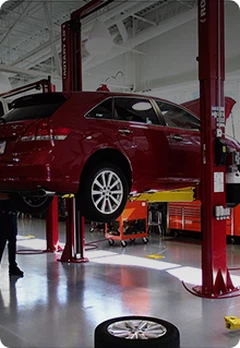
Advanced hydraulic vehicle‑lifting systems support programmable preset height memory for frequently‑used working positions. Whether servicing exhaust assemblies, adjusting gearboxes or completing routine maintenance, operators can recall saved heights by one‑click, avoiding repeated manual fine‑tuning. For high‑throughput auto‑repair shops, this accumulates massive savings on labour and working hours and streamlines whole workflows.
Smart auto‑levelling systems replace old‑style manual adjustment and compensate weight differences among various vehicle types. It delivers balanced stable lifting for nose‑heavy pickup trucks as well as rear‑engine sports cars. Even private household users without professional training can safely and reliably operate these parking lifts.
Optimized for EVs to Meet Electric‑Vehicle‑Servicing Requirements
Equipped with heavy‑duty battery packs, electric vehicles weigh considerably more than equivalent gasoline cars. For instance, a Tesla Model 3 weighs roughly 1.8 tons, 300‑400 kg heavier than comparable fuel‑burning sedans. New‑generation vehicle parking lifts offer base load capacity up to 3.6 tons, fully covering lifting demands for mainstream electric passenger vehicles.
EV battery layouts create special risks: traditional lifting support points sit too close to high‑voltage components. Purpose‑built EV‑compatible lifts come with dedicated adapters matching OEM‑certified chassis lifting points to prevent high‑voltage‑related dangers. As electric‑car ownership keeps rising, repair shops without EV‑ready lifting hardware risk losing EV‑owner clients and falling behind market trends.

Energy‑Eco‑Friendly Design Cuts Long‑Run Operating Costs
New‑generation parking lifts integrate energy‑saving hydraulic systems whose advantages become especially noticeable with multiple units working simultaneously. Variable‑speed motors dynamically adjust power output according to actual vehicle weight, unlike older hydraulic units running at full power regardless of load weight. Power consumption adapts to real‑time demand for improved efficiency.
Machines switch automatically to low‑power standby mode while idle, keeping full operational readiness whilst minimising power draw. Real‑world testing shows commercial workshops running these updated lifts achieve 20‑30 % reduction in total energy expenditure compared to legacy equipment, delivering excellent long‑term cost‑performance.
Space‑Optimised Solutions Matching Urban‑Property‑Development Demands
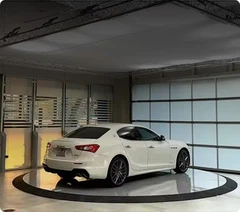
Urban residential and commercial land prices stay high, making real‑estate space precious. Maximising vertical space utilisation becomes critical for solving parking shortages and lifting property value. Conventional flat parking layouts waste valuable land resources, whereas vertical hydraulic and electromechanical stacking vehicle parking lifts multiply parking capacity by stacking automobiles upwards.

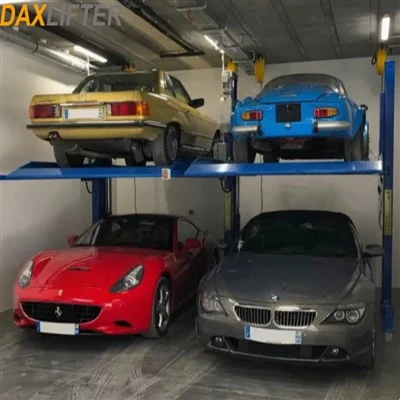
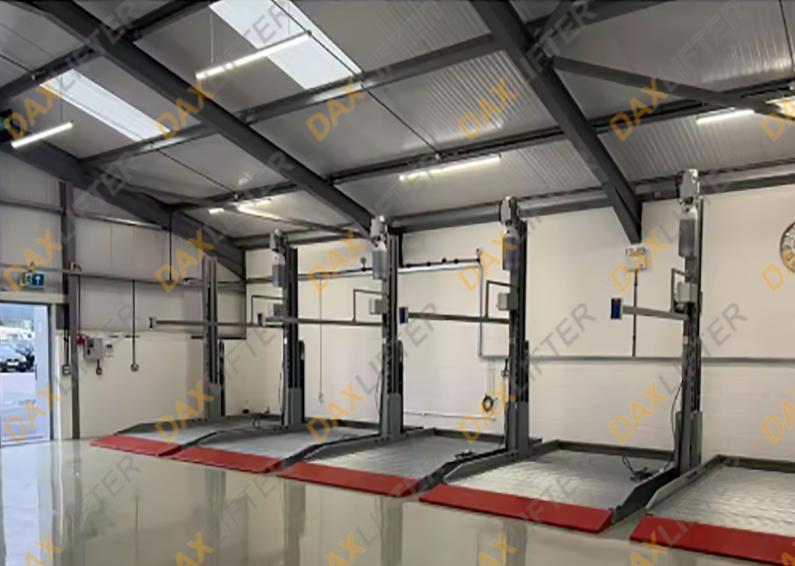
A standard single‑car garage can hold two to three automobiles using stacked, puzzle‑style or tower‑type parking configurations, provided slab strength and ceiling clearances meet specifications. This accounts for their broad adoption in high‑end residential and mixed‑use commercial‑residential projects.
Precision‑engineered hardware works for both household and commercial scenarios. Domestic stacker units driven by hydraulic cylinders or chain‑gear assemblies deliver platform capacities of 2000‑2500 kg for passenger cars, light‑SUVs and pick‑up trucks. Heavy‑duty commercial stacking lifts exceed 3000 kg rated load for large 4×4 vehicles and light commercial automobiles.
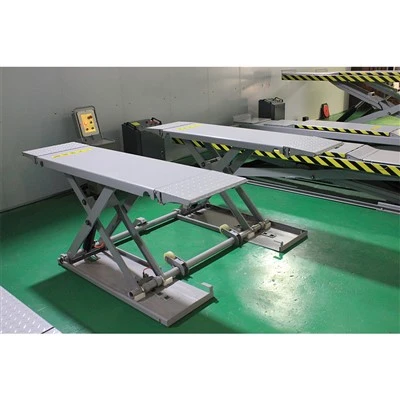
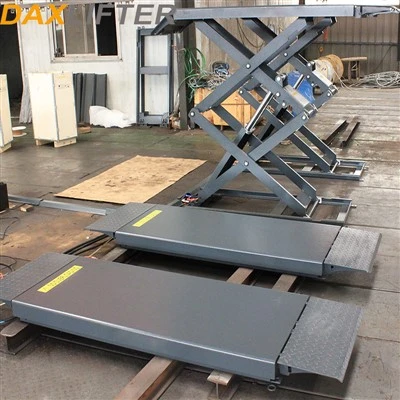
Multiple installation choices accommodate different renovation projects. Pit‑mounted versions sit flush with finished ground after installation without extra protruding height. Surface‑mounted set‑ups need no ground excavation and suit older garages and retrofitted buildings. Two‑level parking lifts need merely 3.4‑3.6 m clear ceiling height; three‑level and tower‑style systems can be custom‑engineered according to building constraints, compatible with most common building‑height standards.
High‑automation hardware enables fast vehicle retrieval. Most stacking and puzzle‑style parking units support one‑click remote or key‑fob activation, delivering vehicles to ground‑level within 60 seconds. Fully‑automatic tower parking systems take 90‑180 seconds for car retrieval, subject to shaft height and queue sequence, well‑suited for high‑frequency daily usage.
Sequence controllers, drive motors, hydraulic power packs and PLC safety interlock assemblies adopt fully sealed protective construction for stable performance and low failure rates. Operators complete full parking‑retrieval workflows by simple one‑click commands. For classic‑car collectors, these technical advances break traditional garage‑space constraints and achieve high‑density parking previously only possible on commercial premises, ideal for expensive central‑city real‑estate where expanding garage bay count proves impractical.
Vertical vehicle‑parking lifts show remarkable return‑on‑investment advantages for commercial‑real‑estate developments. Extra parking spots are created without enlarging building footprints. Upper‑floor spaces remain available for sales or rental revenue, while reduced basement‑excavation depth lowers construction cost and shortens project timelines. On sites constrained by floor‑area‑ratio regulations, vertical stacking instead of flat‑layout parking unlocks property value and boosts project profitability for every additional parking bay.
These systems comply with Australian AS/NZS standards and integrate seamlessly with building electrical and fire‑safety infrastructure. Most manufacturers supply complete engineering documentation ready for Development Application (DA) submission and Building Code of Australia (BCA) assessment, streamlining project implementation.
Parking‑spot scarcity pushes up rental and sales prices for apartments, townhouses and commercial properties in city centres. Adding parking capacity by vertical lifting hardware directly increases property asset value. Developers integrating these parking solutions at early design phases can realise returns many times higher than original equipment expenditure when selling or leasing completed properties.
Precise Equipment‑Selection & Layout for Long‑Term Investment Planning
Core purchasing principle is matching hardware to real‑world requirements. Requirements differ greatly between private households storing two cars and large auto‑repair shops handling dozens of service jobs daily. When selecting vehicle parking lifts, consider not only existing vehicle weight and dimensions but also leave room for future car upgrades and system expansion for long‑term usability.
Professional installation forms the foundation of reliable machine operation, frequently underestimated by buyers. Sub‑standard concrete strength, insufficient ceiling clearance or poor layout lead to post‑installation failures and expensive modification costs. Experienced installation teams conduct pre‑purchase on‑site surveys to detect site constraints in advance and eliminate risks before installation commences.
After‑sales maintenance support directly defines long‑term user satisfaction. Drawing on abundant real‑world project experience, our team evaluates differences across multiple brands and selects dependable, low‑failure, service‑friendly vehicle parking lifts, helping customers avoid problematic units with tedious repair cycles and guarantee stable long‑term performance.
Empowering Future Parking & Auto‑Repair: Unlock New Spatial Value
Continuous technical innovation for vehicle parking lifts opens new opportunities for auto‑shop upgrading, private‑garage renovation and commercial‑property development. Benefits covering smart control, enhanced safety, energy‑saving performance and space‑maximising capacity make new‑generation lifting‑stacking systems far more capable than legacy equipment. Whether you aim to maximise garage‑space utilisation, upgrade auto‑shop hardware or increase commercial‑property supporting‑facility value, DAXLIFTER delivers durable, future‑proof one‑stop parking and vehicle‑service solutions.
Get Custom Vehicle Parking Lifts Solutions From DAXLIFTER
Contact our engineering team if you need custom proposals for residential‑garage retrofits or commercial parking‑system projects. We provide professional site‑oriented suggestions and exclusive quotations tailored to your project constraints.
WhatsApp / Phone: +86 15192782747
Email: sales@daxlifter.com
Reach us today for detailed product specifications and project‑reference information!