








Hey there! As a supplier of rotary stages, I'm stoked to share all the cool customization options we've got for these nifty pieces of equipment. Rotary stages are super versatile and can be found in a bunch of different applications, from industrial manufacturing to high - tech research. Let's dig into what you can customize to make a rotary stage just right for your needs.
1. Size and Dimensions
One of the first things you can customize is the size of the rotary stage. Depending on where you're going to use it, you might need a small, compact one or a big, beefy stage. For example, if you're working in a tight laboratory space, a smaller rotary stage with a diameter of maybe 100 - 200 mm could be perfect. On the other hand, in an industrial setting, you might require a much larger stage with a diameter of over 500 mm to handle heavier loads and larger workpieces.
The height of the rotary stage is also an important factor. You can customize the height to fit your specific setup. If you need it to integrate with an existing piece of machinery, you can adjust the height to ensure a seamless fit. This is especially useful when you're working on a custom - built production line where everything has to work together like a well - oiled machine.
2. Load Capacity
The load capacity of a rotary stage is crucial. It determines how much weight the stage can handle without any issues. You can customize the load capacity based on what you're going to put on the stage. If you're dealing with lightweight components, like small electronic parts, a stage with a load capacity of a few kilograms might be sufficient. But if you're working with heavy industrial parts or multiple components at once, you'll need a stage with a much higher load capacity, perhaps hundreds or even thousands of kilograms.
We take the load - bearing requirements seriously. We use high - quality materials and advanced engineering techniques to ensure that the stage can handle the specified load safely. Whether it's a light or heavy - duty application, we can design and build a rotary stage with the right load capacity for you.
3. Rotation Angle and Speed
Another key customization option is the rotation angle. Some applications might only require a limited rotation angle, like 90 degrees or 180 degrees. For instance, in a pick - and - place operation in a manufacturing line, the rotary stage might only need to rotate a certain amount to move the product from one position to another. On the other hand, there are applications where continuous 360 - degree rotation is necessary, such as in a testing or inspection setup where you need to view all sides of a product.
The rotation speed is also variable. You can choose a slow rotation speed for applications that require precision, like when you're performing a detailed inspection of a delicate component. Or, if you're in a high - volume production environment, you might want a faster rotation speed to increase productivity. We can adjust the motor and the control system of the rotary stage to achieve the desired rotation angle and speed.
4. Motor and Drive System
The motor and drive system of a rotary stage play a huge role in its performance. You can customize these based on your power requirements and control preferences. There are different types of motors available, such as stepper motors and servo motors.
Stepper motors are great for applications where you need precise positioning in discrete steps. They're relatively simple and cost - effective, making them a popular choice for many small - scale and medium - scale applications. Servo motors, on the other hand, offer higher torque, better speed control, and more accurate positioning. They're often used in high - end applications where precision and performance are critical.
In addition to the motor type, you can also customize the drive system. We can provide different control interfaces, like analog or digital, to suit your existing control system. This allows you to integrate the rotary stage easily into your overall setup and have full control over its operation.
5. Surface Finish and Coating
The surface finish and coating of the rotary stage can be customized for different reasons. For example, if the stage is going to be used in a cleanroom environment, you might want a smooth, polished surface finish to prevent the accumulation of dust and particles. A special anti - static coating can also be applied to further reduce the risk of static - related issues.
In harsh industrial environments, a durable, corrosion - resistant coating is essential. This protects the stage from the effects of moisture, chemicals, and other environmental factors. We offer a range of coating options, from simple paint finishes to high - performance ceramic coatings, depending on your specific requirements.
6. Mounting Options
The way you mount the rotary stage is important for its stability and functionality. You can customize the mounting options to fit your particular setup. There are different types of mounting, such as flange mounting, base mounting, and through - hole mounting.
Flange mounting is useful when you need to attach the stage to a flat surface with a flange plate. It provides a secure and stable connection. Base mounting is great for situations where you want to mount the stage directly on a baseplate. Through - hole mounting allows you to pass bolts or other fasteners through the stage for a more secure installation. We can design the rotary stage with the appropriate mounting holes and features to match your mounting needs.


7. Additional Features
We also offer a bunch of additional features that you can add to your rotary stage. For example, you can include limit switches to prevent over - rotation. These switches stop the stage from rotating beyond a certain angle, which is important for safety and protecting your equipment.
Another useful feature is an encoder. An encoder provides feedback on the position and speed of the rotation. This allows for more precise control and monitoring of the stage's operation. You can also add custom - made tooling or fixtures to the stage to hold your workpieces securely.
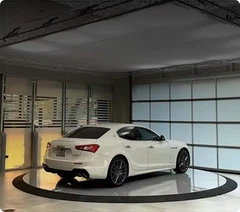
If you're interested in our customizable rotary stages, you might also want to check out these other related products: DAXLIFTER Customized Car Vehicle Rotary Rotating Stage Platform and Floor To Floor Car Lift Platform.
We understand that every customer has unique needs, and that's why we're all about customization. If you have a specific application in mind or some special requirements for your rotary stage, don't hesitate to reach out. We'll work closely with you to design and build a rotary stage that meets all your expectations. Whether it's a simple customization or a highly complex one, we've got the expertise and resources to get the job done right. So, if you're ready to start the procurement process or just want to have a chat about your needs, feel free to contact us and let's have a productive discussion.
References
- General knowledge in the field of rotary stage manufacturing and engineering.
- Industry standards and best practices for custom - built equipment.


